
How to Choose Charging Port Flex Cables for Bulk Repair Orders

Charging port repairs are the second most common job in most repair shops, right behind screen replacements. But when placing a charging port flex cable bulk order, many shop owners treat these as commodity parts — pick the cheapest option, order a box, and move on. That approach works until you start getting callbacks for muffled microphones, weak vibration, or intermittent charging on phones you just "repaired."
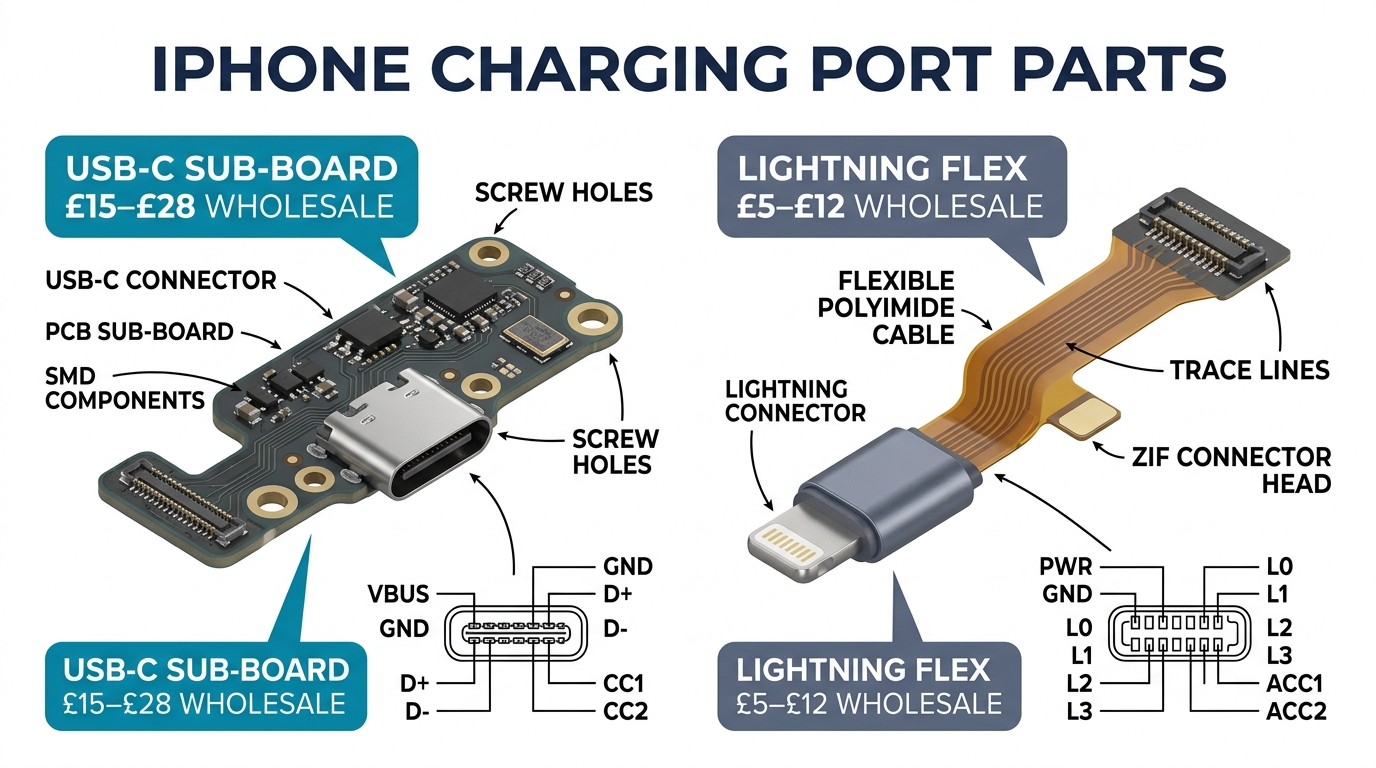
The reason is simple: a charging port flex cable is not just a charging port. It's a multi-component assembly integrated onto a single flexible printed circuit. The port itself is only one of four to six functional components on that ribbon. When you order cheap flex cables in bulk, you're gambling on the quality of every component on that assembly — not just the USB connector.
This guide breaks down exactly what's on a charging port flex cable, how quality tiers differ, which models to prioritize, and how to evaluate suppliers before committing to a large charging port flex cable bulk order.
Need Charging Port Flex in Bulk?
Wholesale charging port assemblies for iPhone & Samsung — tested, factory-direct.
Get Wholesale QuoteWhat a Charging Port Flex Cable Assembly Actually Includes
If you've only ever looked at a charging port flex cable from the connector side, you're missing most of the part. Flip it over, trace the ribbon, and you'll find an entire subsystem soldered onto one flex PCB.
Here's what a typical charging port flex cable assembly contains, using common iPhone and Samsung models as reference:
| Component | Found On | Function | Failure Symptom |
|---|---|---|---|
| USB-C / Lightning connector | All models | Charging and data transfer | Intermittent charging, "accessory not supported," no data sync |
| Primary microphone | iPhone 11–16, Samsung S/A series | Voice capture for calls and recordings | Muffled calls, Siri/voice assistant failure, no audio in voice memos |
| Taptic Engine / vibrator motor connector | iPhone 11–16 | Links haptic feedback motor to logic board | No vibration for notifications, no haptic touch response |
| Headphone jack | iPhone 6s and older, Samsung A series (some) | 3.5mm audio output | No wired audio output |
| Antenna contact points | iPhone 12–16, Samsung S21+ | Cellular and Wi-Fi antenna grounding | Weak signal, dropped calls, slow data |
| Bottom speaker gasket/contact | iPhone 11–16 | Seals and connects bottom speaker | Reduced volume, rattling, distorted bass |
This is why charging port flex cable quality matters more than most buyers realize. A defective microphone component on a $1.50 flex cable means your customer can't make phone calls properly. They don't blame the microphone — they blame your repair shop. And you won't catch this defect unless you test voice call audio on every unit before the customer leaves.
For a deeper look at the charging port assembly and its role in iPhone repairs specifically, see our guide on iPhone Charging Port Replacement: Common Faults, Repair Decisions, and Parts Quality.
Quality Tiers: OEM Pull vs. Aftermarket vs. Budget
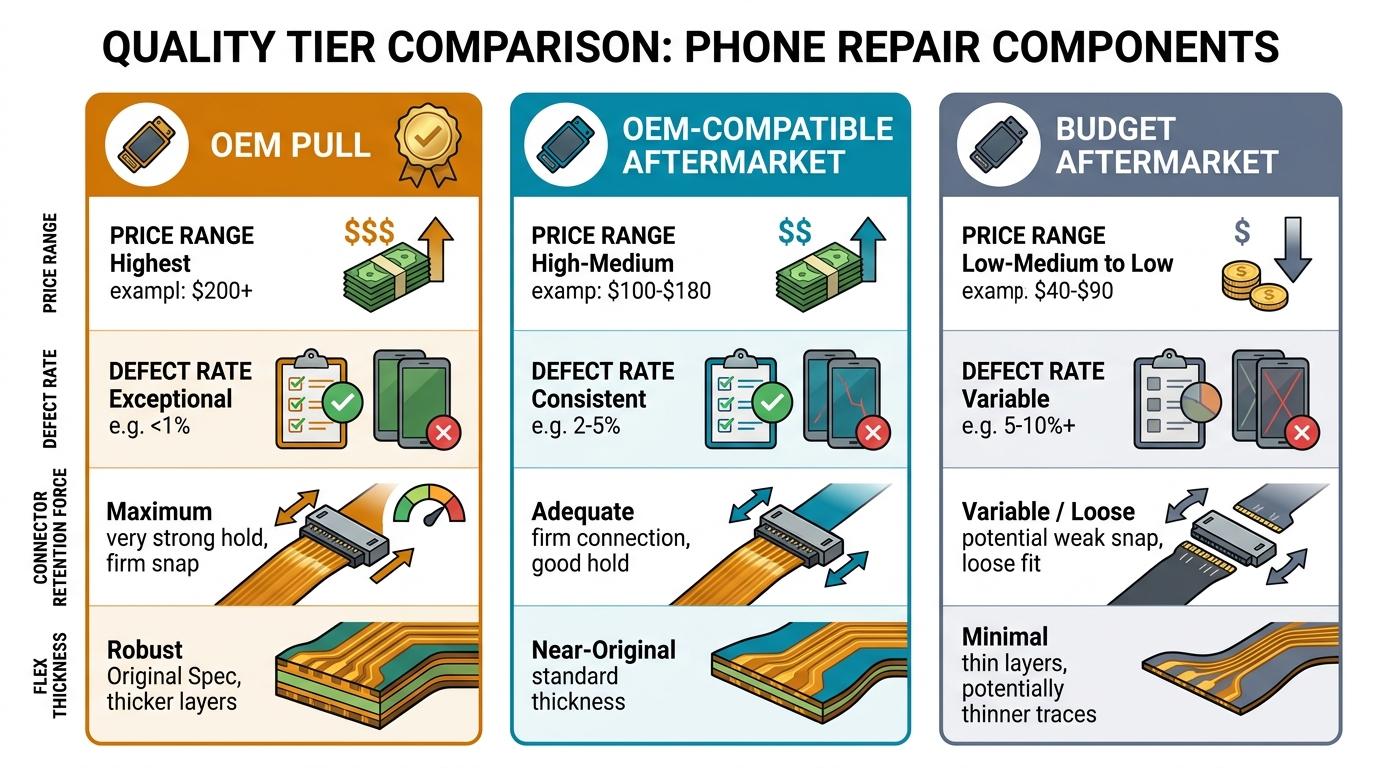
Not all charging port flex cables are manufactured to the same standard. The market breaks into three distinct quality tiers, and understanding the differences will save you from costly batch failures.
Tier 1: OEM Pull (Removed from Original Devices)
These are genuine flex cables pulled from used or refurbished phones. They were manufactured by the original supplier (Foxconn, Luxshare, etc.) and have already passed Apple's or Samsung's QC process.
- Quality: Highest. All components match OEM spec.
- Availability: Limited and inconsistent. Supply depends on used phone teardown volume.
- Price: 2–3x aftermarket pricing. iPhone 14 Pro OEM pull flex cables typically run $6–9 per unit at wholesale.
- Best for: High-end repair shops that charge premium prices and need zero callbacks.
- Risk: Wear from previous use. Connector pins may show micro-scratching. Flex ribbon may have minor bend fatigue.
Tier 2: OEM-Compatible Aftermarket
These are newly manufactured flex cables designed to match OEM specifications. Good aftermarket suppliers use the same connector chipsets (e.g., TI or NXP USB-C controllers) and source microphone MEMS components from reputable fabs.
- Quality: 85–95% of OEM, depending on manufacturer.
- Availability: Abundant. This is where most Shenzhen suppliers operate.
- Price: $1.50–4.00 per unit depending on model and order volume.
- Best for: Most repair shops. Best balance of cost and reliability.
- Risk: Varies by supplier. Microphone sensitivity and antenna contact resistance are the most common areas where aftermarket parts underperform.
Tier 3: Budget Aftermarket
The cheapest option. These use lower-grade connectors, thinner flex ribbon (0.1mm vs. 0.15mm standard), and often skip component testing entirely. Some budget flex cables use recycled connector housings with new pins soldered in.
- Quality: 50–70% of OEM. Functional on arrival but higher failure rate over 3–6 months.
- Availability: Everywhere. This is the default on most B2B platforms when you sort by lowest price.
- Price: $0.60–1.50 per unit.
- Best for: Only if your market is extremely price-sensitive and you accept higher return rates.
- Risk: Charging intermittency within weeks. Mic failures. Loose connector fit. Antenna grounding issues causing signal loss.
Quality Tier Comparison at a Glance
| Factor | OEM Pull | OEM-Compatible Aftermarket | Budget Aftermarket |
|---|---|---|---|
| Connector retention force | 8–10N (Apple spec) | 6–9N | 3–6N |
| Flex ribbon thickness | 0.15mm | 0.12–0.15mm | 0.08–0.12mm |
| Microphone sensitivity | -38 dBV ±2 | -38 dBV ±4 | -38 dBV ±8 or worse |
| Solder joint quality | Machine reflow, inspected | Machine reflow | Mixed hand/machine solder |
| Defect rate (DOA) | <1% | 2–5% | 8–15% |
| 3-month failure rate | <2% | 3–7% | 12–25% |
| Price range (per unit) | $4–9 | $1.50–4.00 | $0.60–1.50 |
For most repair shops, Tier 2 OEM-compatible aftermarket is the sweet spot. The key is finding a supplier whose Tier 2 product is consistently in the 90%+ quality range rather than the 85% floor. That's a supplier evaluation problem, which we cover below.
Model-Specific Variations You Need to Know
Charging port flex cables are not interchangeable across models — and sometimes not even across color variants of the same model. Here's what to watch for.
iPhone: Lightning vs. USB-C Transition
The iPhone 15 series marked Apple's switch from Lightning to USB-C. This creates two distinct inventory categories:
Lightning models (iPhone 7 through iPhone 14):
- Mature aftermarket supply. Prices are stable and low.
- Each model generation has a unique flex cable layout. iPhone 11 flex cables do NOT fit iPhone 12.
- Color variants matter on some models. iPhone 13 charging port flex cables come in separate SKUs for each color because the microphone gasket and antenna contacts differ.
USB-C models (iPhone 15 onward):
- Aftermarket supply is still developing. Quality consistency is lower than Lightning equivalents.
- USB-C has tighter pin tolerances (0.25mm pitch vs. Lightning's 1.0mm pitch), so manufacturing precision matters more.
- Fast charging and data transfer compliance (USB-PD, USB 3.x) requires proper controller chipsets on the flex cable.
For more on the cost implications and repair decisions around iPhone charging ports, check iPhone Charging Port Replacement Cost.
Samsung: The A-Series vs. S-Series Split
Samsung's charging port flex cables differ dramatically between their budget A-series and flagship S-series:
- Galaxy A series (A13, A14, A15, A34, A54): These often still include a 3.5mm headphone jack on the flex cable. The assembly is physically larger. High demand in Africa, LATAM, and Southeast Asia.
- Galaxy S series (S22, S23, S24, S25): No headphone jack. Flex cable is more compact. Antenna integration is more complex due to mmWave and sub-6GHz antenna contacts.
- Galaxy Z Fold/Flip: Unique flex cable routing. Small aftermarket supply. Higher per-unit cost.
Which Models to Stock: Priority List for 2026
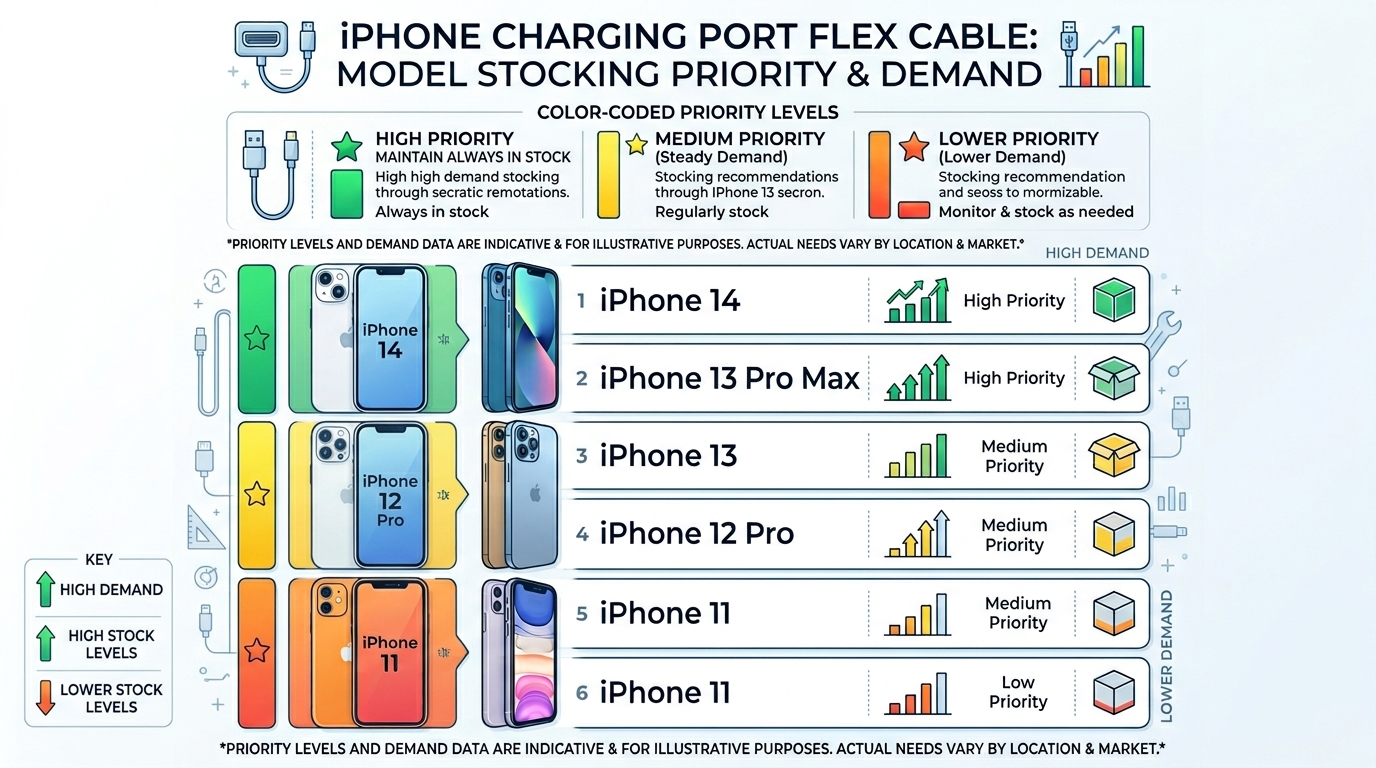
Based on current repair volume data across global markets:
| Priority | Models | Why Stock These | Suggested Monthly Quantity (10-tech shop) |
|---|---|---|---|
| High | iPhone 13 / 13 Pro | Peak repair age (3 years old), huge install base | 30–50 units |
| High | iPhone 14 / 14 Pro | Growing repair volume, high install base | 25–40 units |
| High | Samsung A14 / A15 | Dominant in emerging markets, high failure rate | 20–40 units |
| Medium | iPhone 12 / 12 Pro | Still common, declining slowly | 15–25 units |
| Medium | iPhone 15 / 15 Pro | Newer but USB-C issues emerging | 10–20 units |
| Medium | Samsung A34 / A54 | Mid-range with solid repair demand | 15–25 units |
| Medium | Samsung S23 / S24 | Flagship repairs, higher part cost, lower volume | 10–15 units |
| Low | iPhone 11 | Aging out but still in circulation | 10–15 units |
| Low | iPhone 16 series | Too new for significant repair volume yet | 5–10 units |
Adjust these quantities based on your market. Shops in the UK and Europe see heavier iPhone mix. Shops in Africa and Southeast Asia skew toward Samsung A-series. Our guide to choosing charging ports for bulk repair orders covers broader stocking strategy.
How to Evaluate Flex Cable Quality Before You Buy
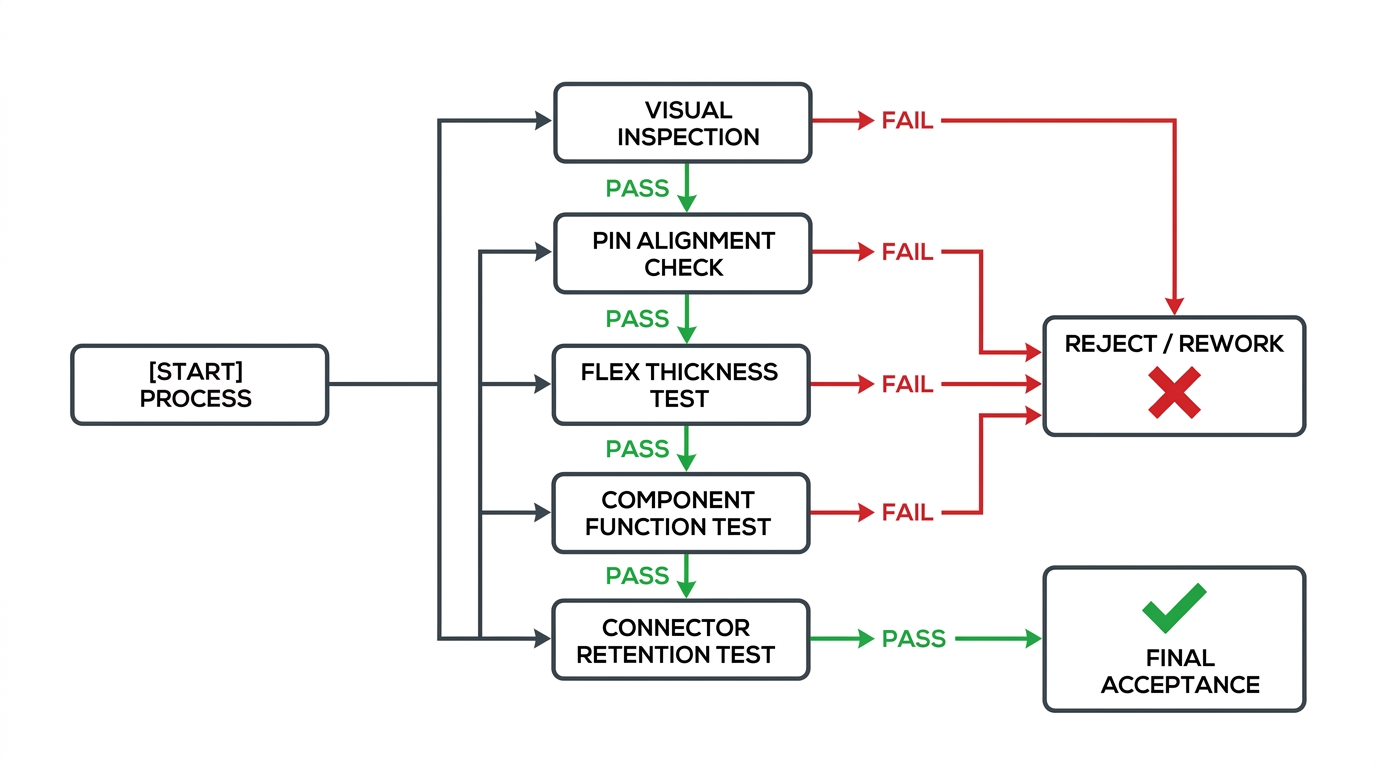
You can't tell flex cable quality from a product photo. Here's what to actually check when evaluating samples from a new supplier.
Physical Inspection Checklist
Connector pins: Look at the USB-C or Lightning connector under magnification (10x loupe is enough). Pins should be uniformly gold-plated with no visible corrosion, misalignment, or solder bridges. On USB-C connectors, all 24 pins should be present and evenly spaced.
Flex ribbon thickness: Bend the flex cable gently between your fingers. A quality flex cable has body to it — it shouldn't feel like tissue paper. Measure with calipers if possible. Target 0.12mm minimum; 0.15mm is OEM standard.
Solder joints: Examine where components (microphone, connector, antenna pads) meet the flex ribbon. Joints should be smooth and concave (indicating proper reflow). Blobby, irregular solder indicates hand work or poor reflow profiles.
Component markings: Quality flex cables have legible component markings (capacitor values, IC part numbers). Budget parts often have blank or smudged markings because they use unmarked components.
Connector housing: The plastic housing around the USB-C or Lightning connector should be dimensionally accurate. Test fit in an actual phone chassis — it should click into the frame bracket without forcing or wobbling.
Functional Testing Protocol
Before committing to a bulk order, test at least 5 sample units with these checks:
- Charging test: Connect to a USB-C PD charger. Verify the phone reports correct wattage (not just "charging" but fast charging at expected speed).
- Data transfer test: Connect to a computer. Verify the phone appears in iTunes/Finder (iPhone) or file manager (Samsung). Transfer a file to confirm data pins work.
- Microphone test: Make a voice call. Record a voice memo. Play it back. Audio should be clear, not muffled or static-heavy.
- Vibration test: Trigger haptic feedback (receive a notification or toggle vibrate mode). The motor should engage crisply.
- Signal test: Check cellular signal bars before and after installation. Run a speed test. Poor antenna contacts can reduce signal by 1–2 bars.
If even one out of five samples fails a functional test, reject the batch. A 20% sample failure rate means you'll have much worse field failure rates. For more on diagnosing post-installation issues, see Charging Port Failures After Replacement.
Common Defects in Cheap Flex Cables
Knowing the most frequent defect types helps you spot problems before they reach customers. These are the issues we see most often in budget aftermarket charging port flex cables:
Intermittent charging: The most common defect. Caused by poor connector pin plating or incorrect spring tension in the connector housing. The cable charges when inserted at one angle but disconnects with slight movement. Customers report this within days.
Microphone failure or degradation: The MEMS microphone on cheap flex cables is often the weakest component. It works initially but degrades within weeks, especially in humid climates (common in Southeast Asia and parts of Africa). Symptoms: muffled voice on calls, Siri not understanding commands, video recordings with poor audio.
Slow charging (no fast charge): The flex cable connects but only delivers 5W instead of the expected 20W+ fast charging. This happens when the USB-C controller chip on the flex doesn't support USB-PD negotiation properly. The phone charges, but takes 3 hours instead of 90 minutes.
Loose connector fit: The charging cable doesn't click firmly into the port. It falls out when the phone is moved. Caused by undersized connector housing or incorrect pin spring tension. This is a shop reputation killer — the customer thinks you installed the part wrong.
No vibration: The Taptic Engine / vibrator motor connector on the flex cable has a poor solder joint or incorrect pin-out. The motor simply doesn't engage. Easy to miss during a quick post-repair check if you don't specifically test haptic feedback.
Antenna signal loss: The antenna contact pads on the flex cable don't make proper contact with the phone's antenna. Causes 1–2 bar signal reduction. Customers rarely connect this to the charging port repair, but it creates a bad experience. This issue is detailed in our iPhone Not Charging: Diagnosis Guide, which covers how charging port issues overlap with other system functions.
Supplier Evaluation: What to Ask Before Placing a Bulk Order
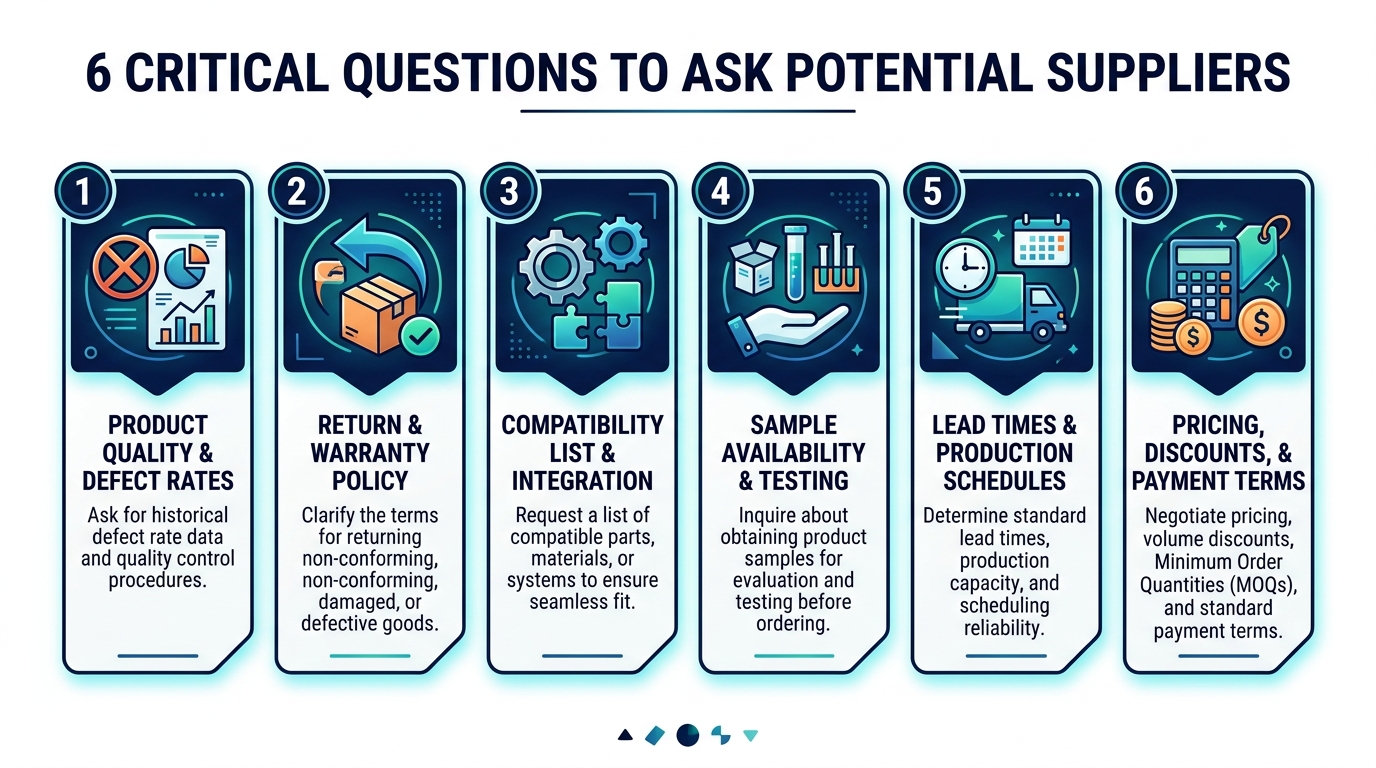
Finding a reliable supplier for your charging port flex cable bulk order means asking the right questions upfront. Here's your checklist.
Questions to Ask Every Potential Supplier
-
"What is your defect rate on charging port flex cables, and how do you measure it?" — A credible supplier will cite specific DOA (dead-on-arrival) percentages per model. If they say "zero defects," they're either lying or not testing.
-
"Do you have a compatibility list with tested models and variants?" — Professional suppliers maintain a compatibility matrix showing which SKU fits which model, color variant, and region variant (if applicable).
-
"What's your return/replacement policy specifically for flex cable defects?" — Flex cables have a higher defect rate than screens or batteries. You need clear terms: timeframe for claims (30 days minimum), process for reporting defects, whether they replace or refund.
-
"Can I get 5–10 samples across different models before placing a full order?" — Any supplier confident in their quality will sell or provide samples. If they insist on minimum order quantities with no sample option, that's a red flag.
-
"What components are on your flex cable assembly? Is the microphone included?" — This verifies the supplier actually knows their product. Some budget suppliers sell connector-only parts mislabeled as "complete flex cable assembly."
-
"Where are the flex cables manufactured, and do you do incoming QC or just pass through?" — Shenzhen-based suppliers who do their own quality control are preferable to pure trading companies that never see the product.
Red Flags to Watch For
- Prices significantly below market average (more than 30% cheaper than competitors for the same model)
- No model-specific product photos (they use generic images for all models)
- Unwillingness to provide samples
- No stated defect rate or warranty terms
- Mixed reviews mentioning microphone issues specifically (the most commonly skimped component)
For a broader framework on evaluating phone parts suppliers, see our Cell Phone Parts Wholesale: The Complete Sourcing Guide.
Order Planning: Structuring Your Charging Port Flex Cable Bulk Order
Once you've selected a supplier and validated samples, here's how to structure your first bulk order.
First Order Strategy
Start conservative. Even with good samples, a full production batch can vary from the sample run.
- First order: 50–100 units across your top 3–4 models. This gives you enough to test in real repairs over 2–4 weeks.
- Test period: Install these in customer phones and track callbacks for 30 days. Log any defects by model and defect type.
- Second order: If callback rate is below 5%, scale up to your full monthly demand. If it's above 5%, discuss with the supplier or find an alternative source.
Inventory Management Tips
- Don't over-stock USB-C models yet. The aftermarket is still maturing. Order 4–6 weeks of supply maximum for iPhone 15/16 flex cables.
- Stock 8–12 weeks of supply for high-volume Lightning models. iPhone 13 and 14 charging port flex cables are stable in quality and price — buying more gives you volume discounts.
- Keep Samsung A-series stock proportional to your market. If you serve a market where Samsung A-series dominates (much of Africa, India, Southeast Asia), stock these at the same priority as iPhones.
- Track defect rates by model AND by shipment batch. A supplier's quality can shift between production runs. Catching a bad batch early saves you dozens of callbacks.
Frequently Asked Questions
What's the difference between a charging port and a charging port flex cable?
A "charging port" by itself refers to just the USB-C or Lightning connector. A "charging port flex cable" or "charging port assembly" is the complete part that includes the connector plus the microphone, antenna contacts, vibrator motor connector, and other components mounted on a flexible printed circuit board. When ordering for repairs, you almost always need the full flex cable assembly, not just the connector.
How many charging port flex cables should I order for my first bulk purchase?
For a shop with 5–10 technicians, start with 50–100 units across your top 3–4 models. Focus on iPhone 13, iPhone 14, and your highest-demand Samsung models. This gives you enough to test real-world quality over a month before scaling up. See the stocking quantity table above for model-specific suggestions.
Can I use the same charging port flex cable across different color variants of the same iPhone model?
It depends on the model. For some iPhone generations (like iPhone 13), the flex cable differs by color variant — each color has a slightly different antenna contact configuration. For other models, the flex cable is universal across colors. Always confirm with your supplier which color variants their SKU covers, and check the compatibility list before ordering.
How do I test if a charging port flex cable is good quality before installing it?
Inspect the connector pins under magnification for even gold plating and alignment. Check the flex ribbon thickness (should be 0.12mm+). Then install a sample unit and test five functions: charging speed (confirm fast charge), data transfer, microphone audio quality (make a call), vibration/haptics, and cellular signal strength. If any function fails or degrades, reject the batch.
What is the most common defect in aftermarket charging port flex cables?
Intermittent charging is the most frequent defect — the phone charges at one angle but disconnects with movement. The second most common issue is microphone degradation, where call audio becomes muffled within weeks of installation. Both defects are caused by cost-cutting on the connector and MEMS microphone components during manufacturing.
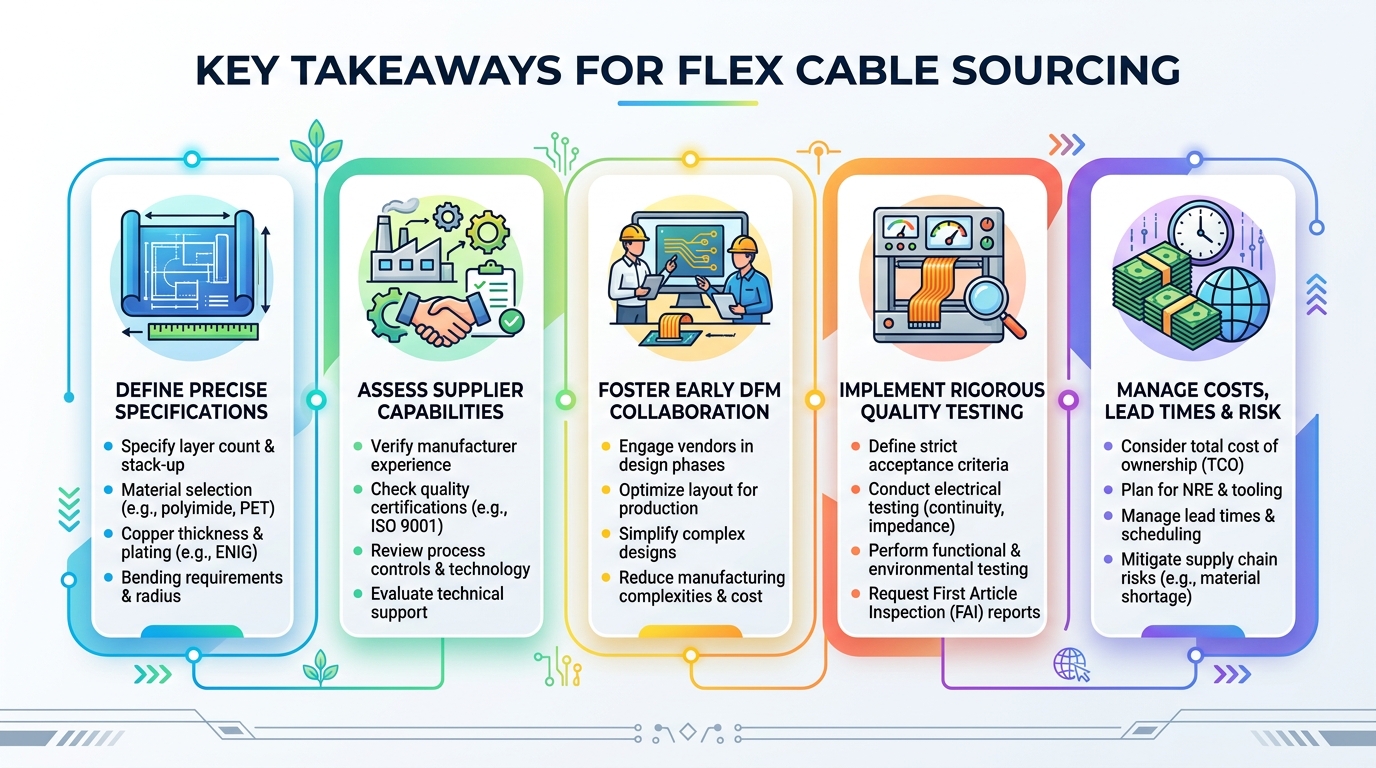
Next Steps: Source Quality Charging Port Flex Cables
Choosing the right charging port flex cable supplier comes down to three things: understanding what's on the assembly, testing samples before committing, and tracking defect rates after installation. The cheapest per-unit price almost never delivers the lowest total cost once you factor in callbacks, rework labor, and lost customers.
If you're looking for a supplier who provides model-specific compatibility data, sample orders, and consistent flex cable quality across production batches, request charging port flex cable samples or a bulk quote from PRSPARES. We ship from Shenzhen with per-model defect rate tracking and a clear return policy on flex cable parts.