
iPhone Charging Port Replacement Cost: When to Clean, Repair, or Replace
Your iPhone stops charging. You try different cables, different outlets, different chargers — nothing works. The immediate thought is "broken charging port" and "how much will this cost?" But here's the thing that most iPhone charging port replacement cost guides don't tell you: roughly 40% of "broken" charging ports aren't broken at all. They're packed with lint, dust, and pocket debris that prevents the cable from seating properly.
The real iPhone charging port replacement cost ranges from $0 (a toothpick and some compressed air) to $150+ at a repair shop, depending on whether the port actually needs replacing. This guide covers the full diagnostic process — how to tell if your port needs cleaning, repair, or full replacement — along with the actual cost by model, what shops charge, and the economics of charging port repair for shops that offer this service.
Need Charging Port Flex in Bulk?
Wholesale charging port assemblies for iPhone & Samsung — tested, factory-direct.
Get Wholesale QuoteiPhone Charging Port Replacement Cost by Model
When the port genuinely needs replacement, here's what it costs across all current repair channels.
| iPhone Model | Apple (Other Damage) | Third-Party Shop | DIY Parts |
|---|---|---|---|
| iPhone 11 | $269 | $50–$80 | $4–$10 |
| iPhone 12 | $269 | $60–$90 | $5–$12 |
| iPhone 13 | $269 | $70–$100 | $6–$15 |
| iPhone 14 | $349 | $80–$120 | $8–$18 |
| iPhone 15 (USB-C) | $349 | $90–$140 | $10–$22 |
| iPhone 16 (USB-C) | $349 | $100–$150 | $12–$25 |
Apple doesn't replace just the charging port. Apple classifies charging port issues under "Other damage," which means a full unit replacement — not a component repair. That's why Apple's price is $269–$349: you're effectively getting a refurbished phone, not a port fix. This is the single biggest price advantage third-party shops have for this repair.
Third-party shops replace the actual charging port flex assembly — a 20–45 minute component-level repair that costs $50–$150 depending on model. The price difference between Apple and third-party is $170–$250, making this one of the strongest cases for third-party repair on any iPhone issue.
The Lightning vs USB-C Split
The iPhone 15 was the first iPhone with USB-C, replacing the Lightning connector used since iPhone 5. This matters for repair:
- Lightning (iPhone 11–14): Parts are mature, cheap ($4–$18), and widely available. The repair process is well-established.
- USB-C (iPhone 15–16): Parts are newer, slightly more expensive ($10–$25), and the flex cable assembly is different from Lightning. USB-C ports are mechanically more robust than Lightning, so fewer failures are expected long-term — but when they do fail, the repair costs more.
Clean, Repair, or Replace: The Diagnostic Decision Tree
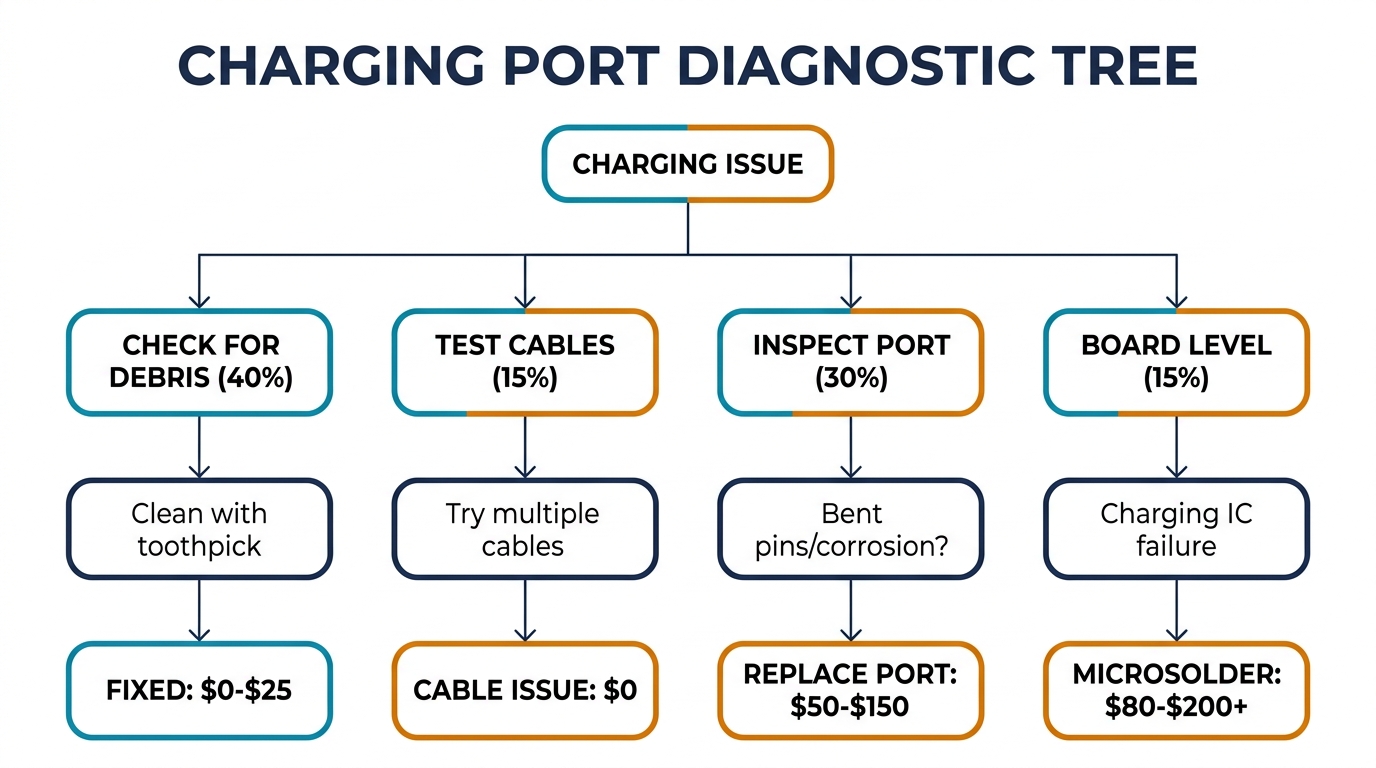
Before quoting a charging port replacement, diagnose the actual problem. This saves customers money and builds trust — and for shops, a $10 cleaning fee is better than a $0 walkout from a customer who can't afford $100.
Step 1: Check for Debris (40% of Cases)
Shine a flashlight into the charging port. If you see lint, dust, or compressed debris at the back of the port, that's likely the problem. The Lightning or USB-C cable can't fully seat because debris is blocking it.
Fix: Use a plastic or wooden toothpick (never metal — it can short the pins) to gently scrape out debris. Follow with a blast of compressed air. Test with a known-good cable.
Cost: Free (DIY) or $10–$25 at a shop. Some shops offer port cleaning as a free diagnostic service to build goodwill.
Step 2: Test with Multiple Cables (15% of Cases)
If the port looks clean but charging is unreliable, the issue might be the cable, not the port. Frayed cables, bent Lightning tips, or worn USB-C connectors cause intermittent charging that mimics a bad port.
Fix: Test with at least two different cables, preferably Apple-certified or known-good. If both cables work inconsistently, the port is likely damaged.
Cost: $0 (a cable swap isn't a repair).
Step 3: Inspect for Physical Damage (30% of Cases)
Look for bent pins inside the port, corrosion (green or white residue), or a port that feels physically loose when the cable is inserted. These indicate actual port damage that requires component replacement.
Fix: Full charging port flex assembly replacement. This replaces the port, its flex cable, and typically the microphone and some antenna components that share the same flex assembly.
Cost: $50–$150 at a third-party shop depending on model.
Step 4: Check for Board-Level Issues (15% of Cases)
If the port and cable are both fine but the phone still won't charge, the issue may be on the logic board — a damaged charging IC, tristar/hydra chip failure, or broken solder joint. These require microsoldering repair.
Fix: Board-level microsoldering. This is specialist work that most standard repair shops don't offer.
Cost: $80–$200+ at a shop with microsoldering capability.
For shops, clearly communicating this diagnostic process to customers is valuable. "Let me check if it just needs a clean before we talk about replacing anything" is the sentence that builds customer trust.
Charging Port Parts: What Goes Into the Repair
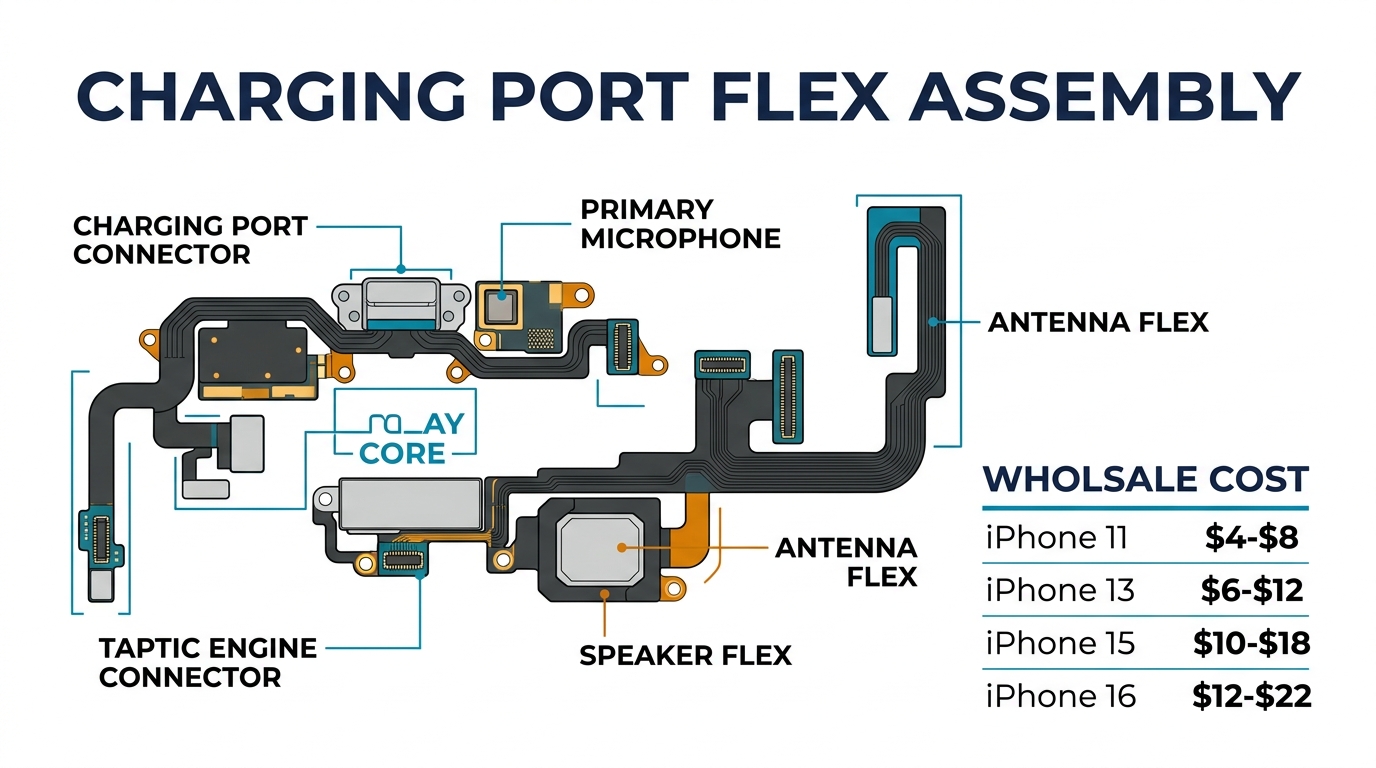
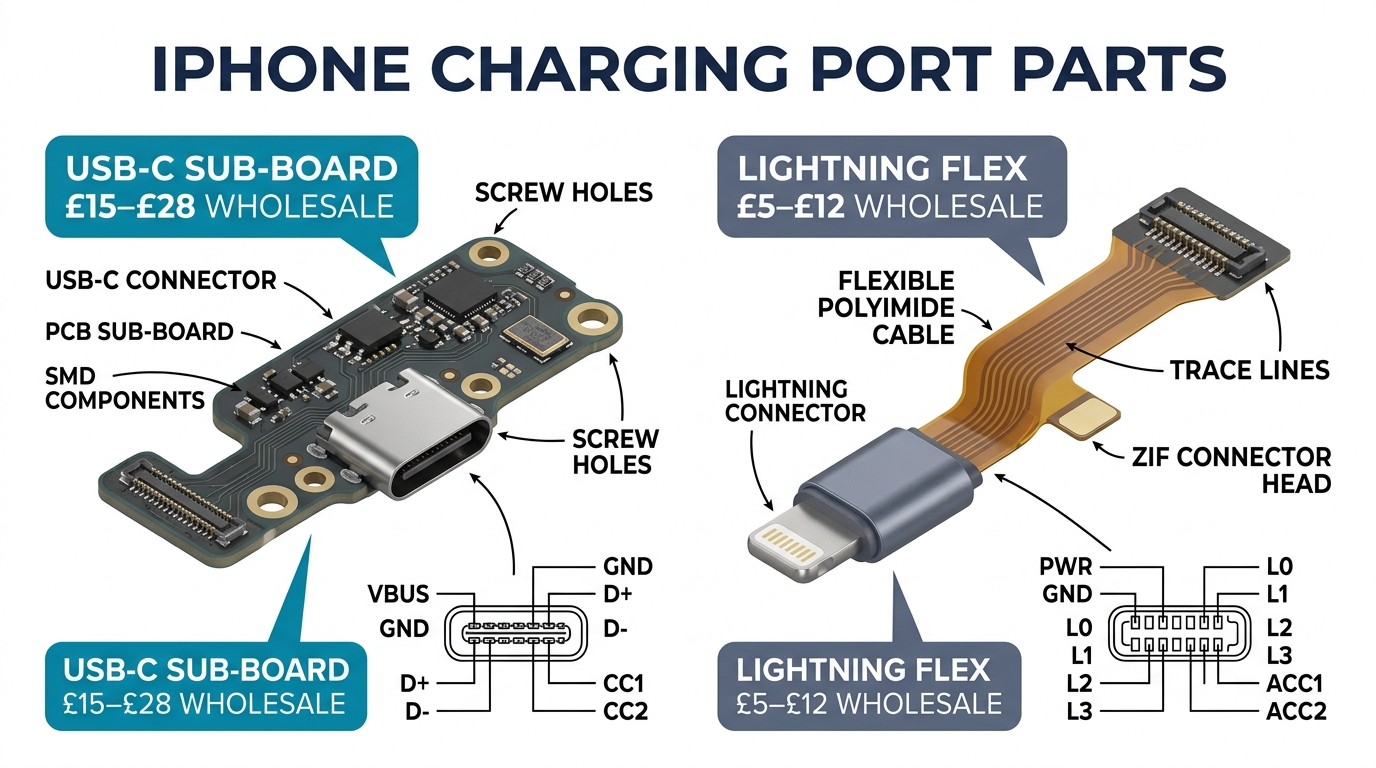
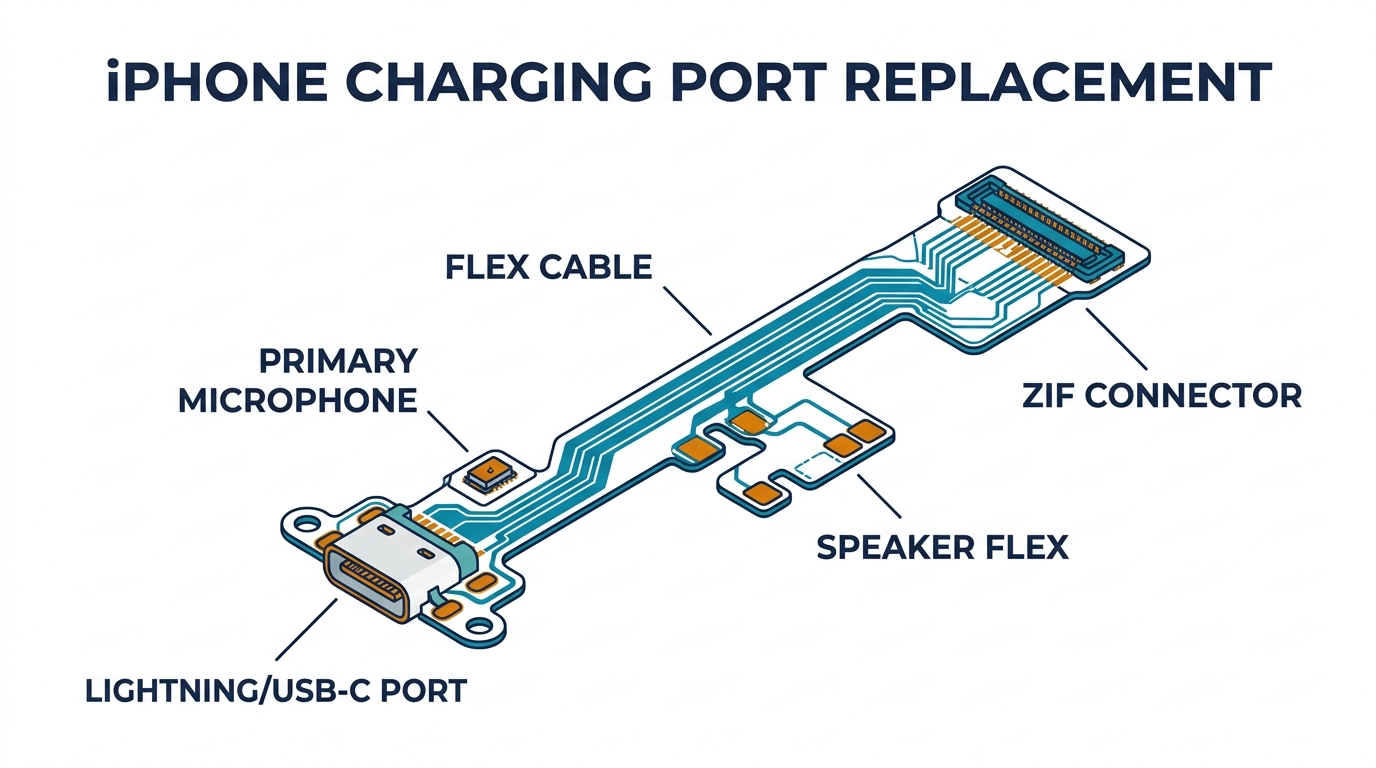
The "charging port" isn't just a port — it's a flex cable assembly that includes multiple components.
What the Flex Assembly Includes
On most iPhone models, the charging port flex assembly contains:
- Charging port connector (Lightning or USB-C)
- Primary microphone (bottom microphone used for calls and voice recording)
- Taptic Engine connector (on some models)
- Speaker flex (connection to bottom speaker)
- Antenna flex (cellular antenna components on some models)
This means a charging port replacement also refreshes the microphone and speaker connection — which is why some customers notice improved call quality after a port replacement.
Wholesale Parts Cost by Model
| iPhone Model | Connector Type | Wholesale Cost | Notes |
|---|---|---|---|
| iPhone 11 | Lightning | $4–$8 | Cheapest, high supply |
| iPhone 12 | Lightning | $5–$10 | Mature market |
| iPhone 13 | Lightning | $6–$12 | Strong availability |
| iPhone 14 | Lightning | $8–$15 | Still widely available |
| iPhone 15 | USB-C | $10–$18 | Newer, slightly higher cost |
| iPhone 16 | USB-C | $12–$22 | Latest model, highest cost |
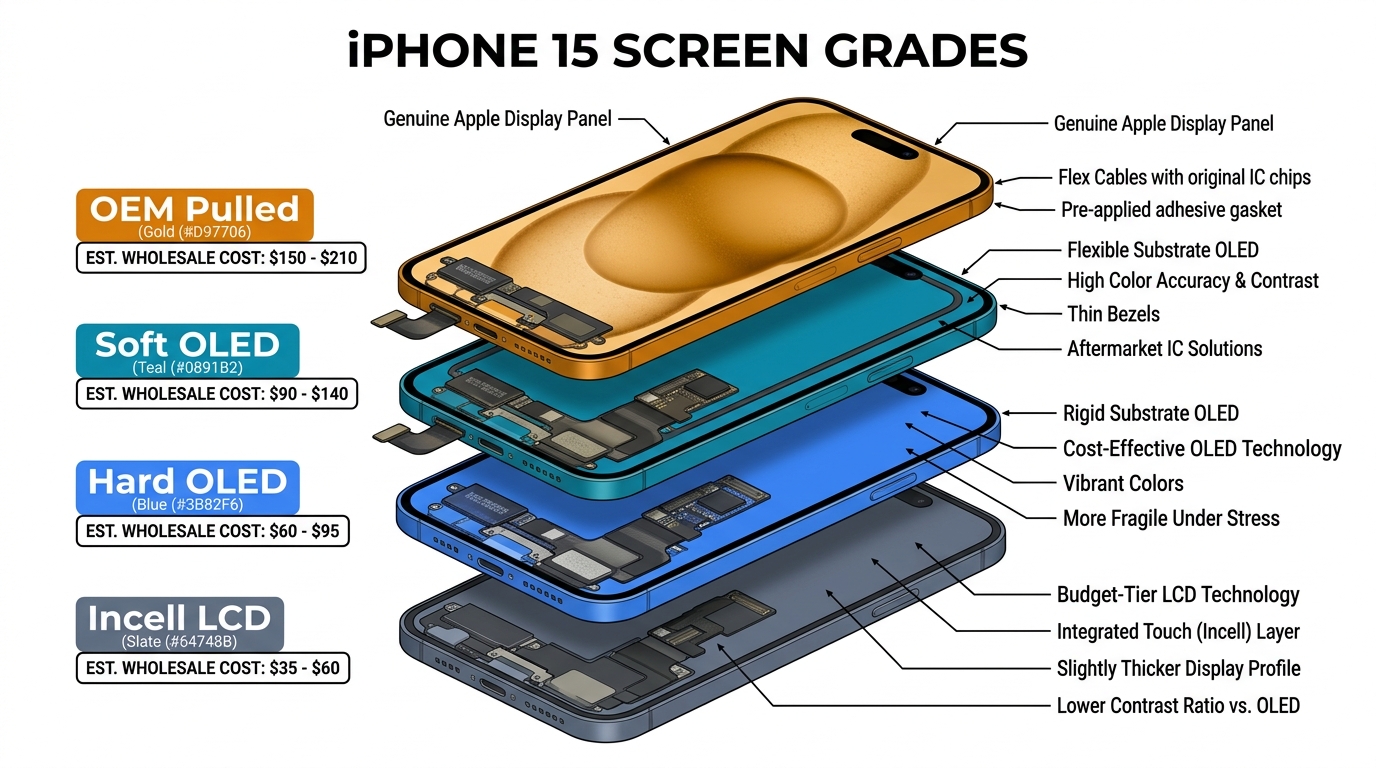
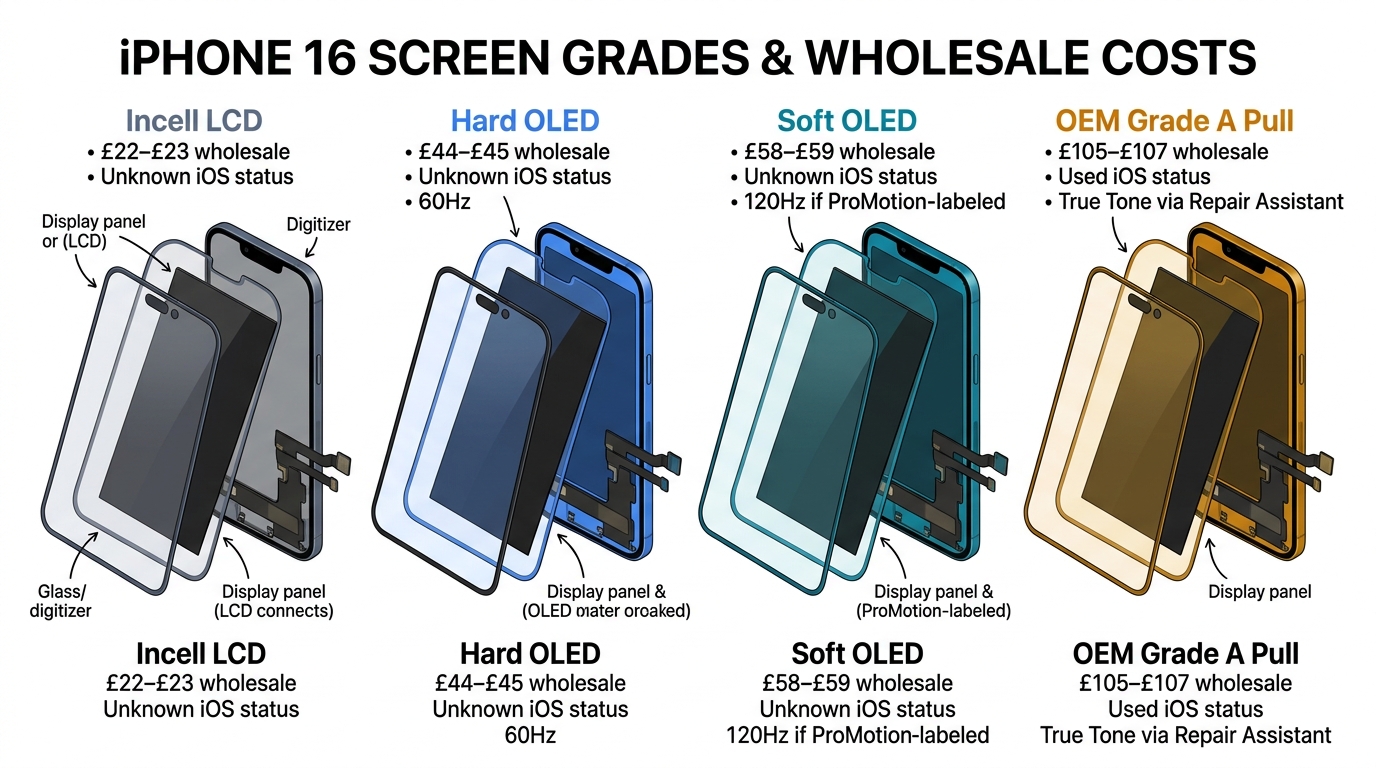
Charging port parts are the cheapest component category in any repair shop. Even the most expensive USB-C flex assembly (iPhone 16 at $22) is a fraction of what screen or camera parts cost.
For inventory recommendations on charging ports and other parts, see our small repair shop stock guide.
Charging Port Replacement Margins for Repair Shops
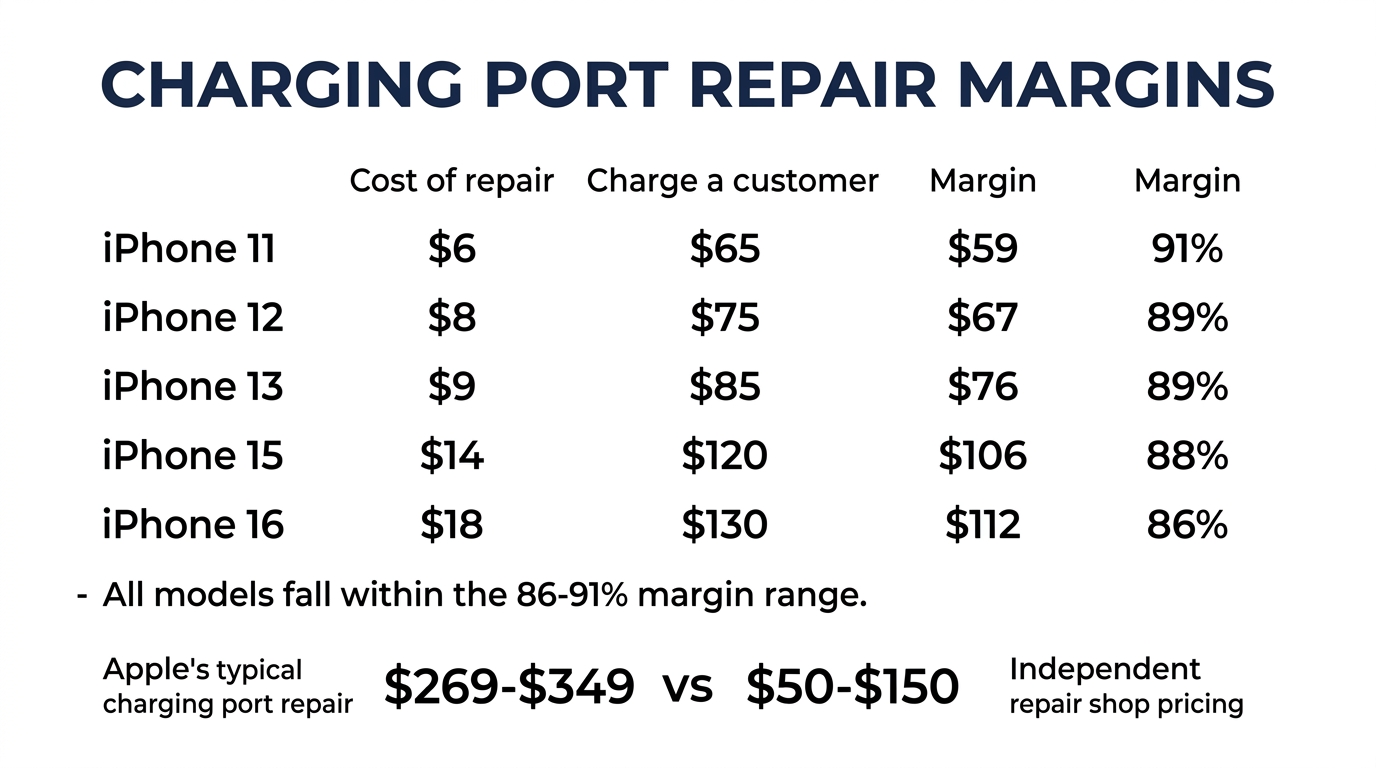
Charging port repair produces excellent margins — not quite as high as battery replacement, but with the added advantage of being a less commoditized service (customers are less likely to price-shop for a port repair than for a battery or screen).
Margin Analysis
| iPhone Model | Wholesale Part | Shop Charge | Gross Margin | Margin % |
|---|---|---|---|---|
| iPhone 11 | $6 | $65 | $59 | 91% |
| iPhone 12 | $8 | $75 | $67 | 89% |
| iPhone 13 | $9 | $85 | $76 | 89% |
| iPhone 14 | $12 | $100 | $88 | 88% |
| iPhone 15 | $14 | $120 | $106 | 88% |
| iPhone 16 | $18 | $130 | $112 | 86% |
Margins range from 86–91%. Parts cost $6–$18, shops charge $65–$130, and the repair takes 20–45 minutes. Per-hour profitability is strong: a $85 iPhone 13 port repair at 30 minutes of labour equates to $152/hour in gross margin.
Revenue Building Strategies
Cleaning as a gateway service. Offer port cleaning at $10–$25. It takes 5 minutes, costs nothing in parts, and builds trust. Customers who come in for a $10 clean today come back for a $200 screen repair tomorrow.
Bundle with battery replacement. A phone with a bad charging port is almost certainly 2+ years old, meaning the battery is likely at 80–85% health. Offer a combo: "Port replacement plus battery for $110" (instead of $85 + $60 separately). The customer saves money, you increase the ticket, and the phone leaves in significantly better condition.
Upsell during other repairs. When a phone comes in for screen repair, test the charging port. If it's intermittent or full of debris, mention it: "Your charging port has some buildup — I can clean it while the phone is open for $10 extra."
Need wholesale charging port parts? We supply Lightning and USB-C charging port flex assemblies for iPhone 11 through iPhone 16, tested for proper charging, data transfer, and microphone function. Request wholesale pricing.
Common Charging Port Repair Mistakes
Not Cleaning First
The number one mistake — both by customers and by shops — is jumping straight to replacement without checking for debris. A shop that replaces a port that only needed cleaning is doing unnecessary work and may face a callback when the "new" port develops the same "problem" (because the customer's pockets are still full of lint).
Always inspect and clean first. If cleaning fixes it, charge $10–$25 and explain to the customer how to keep the port clean (a case with a port cover, periodic cleaning with compressed air).
Damaging the Flex Cable During Installation
The charging port flex cable routes through a tight path and connects to delicate ZIF connectors on the logic board. Forcing the flex, using metal tools near the connector, or failing to properly seat the ZIF connector can cause immediate failure or intermittent issues.
For technicians: Use plastic spudgers only. Ensure the ZIF connector clicks fully into place. Test charging, microphone, and speaker function before reassembly.
Ignoring Water Damage Indicators
If a customer's charging port stopped working suddenly (not gradually), check the liquid contact indicators. Water damage to the charging port area can corrode the pins and flex cable. Replacing the port without addressing underlying corrosion will result in a repeat failure.
Quoting Apple's $269–$349 as the Alternative
Apple's price includes a full unit replacement — the customer gets a different phone. A third-party port replacement keeps the same phone with the same data and settings. These are different services at different price points. Frame your pricing against the actual repair, not against Apple's unit replacement.
Frequently Asked Questions
How much does it cost to fix an iPhone charging port?
Third-party shops charge $50–$150 for iPhone charging port replacement depending on model. iPhone 11–13 (Lightning) costs $50–$100. iPhone 15–16 (USB-C) costs $90–$150. Apple doesn't do component-level port repairs — they charge $269–$349 for a full unit replacement. Port cleaning (which fixes ~40% of charging issues) costs $10–$25 at most shops.
How do I know if my iPhone charging port needs replacing?
First, check for debris — shine a flashlight into the port and look for lint buildup. Try different cables. If the port is physically loose, has visible corrosion, or doesn't work with multiple tested cables after cleaning, it likely needs replacement. A repair shop can diagnose this in 5–10 minutes, often for free.
Is it worth fixing an iPhone charging port?
Yes, in almost all cases. A $50–$130 port repair on a phone worth $150–$600+ is straightforward math. The only exception is if the phone has multiple other issues (cracked screen, bad battery, speaker problems) that push total repair cost past 50% of the phone's value.
Can I fix my iPhone charging port myself?
DIY charging port replacement is possible with parts ($4–$25) and basic tools. However, the repair involves disconnecting the battery, removing the display assembly, and routing a delicate flex cable — it's more complex than battery replacement. If you've done phone repairs before, it's manageable. If it's your first time, the risk of damaging other components is meaningful. Professional repair at $50–$130 may be the safer choice.
Why does Apple charge so much for charging port repair?
Apple doesn't repair charging ports — they replace the entire unit. When you bring an iPhone to Apple for a charging port issue, they classify it as "Other damage" and offer a full replacement device at $269–$349. Third-party shops can replace just the port component for $50–$150 because they do component-level repair that Apple doesn't offer.
A High-Margin Service That Builds Trust
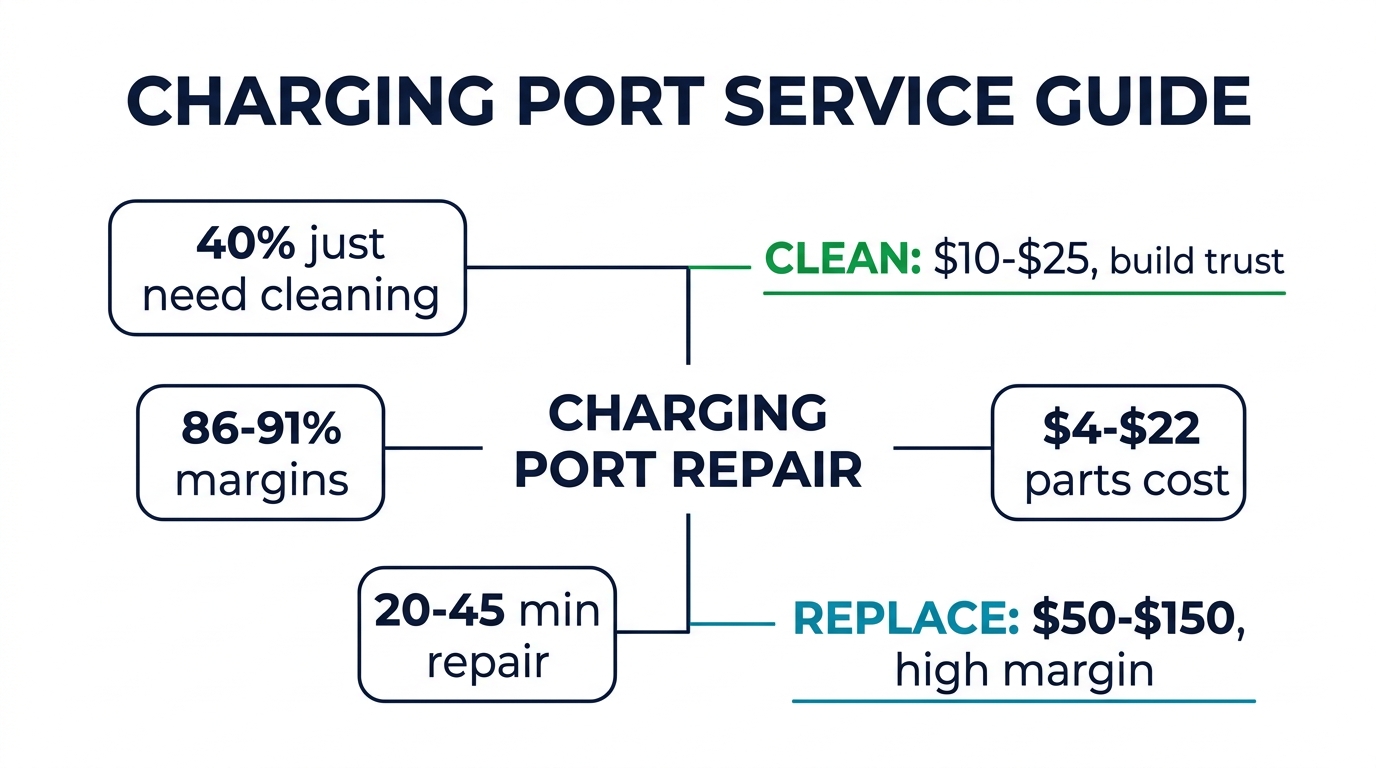
iPhone charging port replacement cost is one of the most favourable repair economics in any shop — parts cost $4–$22, repairs charge $50–$150, and margins sit at 86–91%. But the real value of charging port repair isn't just the margin on the replacement. It's the diagnostic process: testing, cleaning, and honest communication that turns a first-time customer into a repeat client.
Start with cleaning. If that fixes it, charge a small fee and earn trust. If the port needs replacing, the repair is fast, cheap on parts, and produces strong margins. Either way, the customer walks out with a working phone and a reason to come back.
Need wholesale iPhone charging port parts? We supply tested Lightning and USB-C flex assemblies for iPhone 11 through iPhone 16. Request a wholesale quote for bulk pricing on the models your shop services most.