
iPhone Screen Replacement Cost: Full Breakdown by Model and Screen Grade
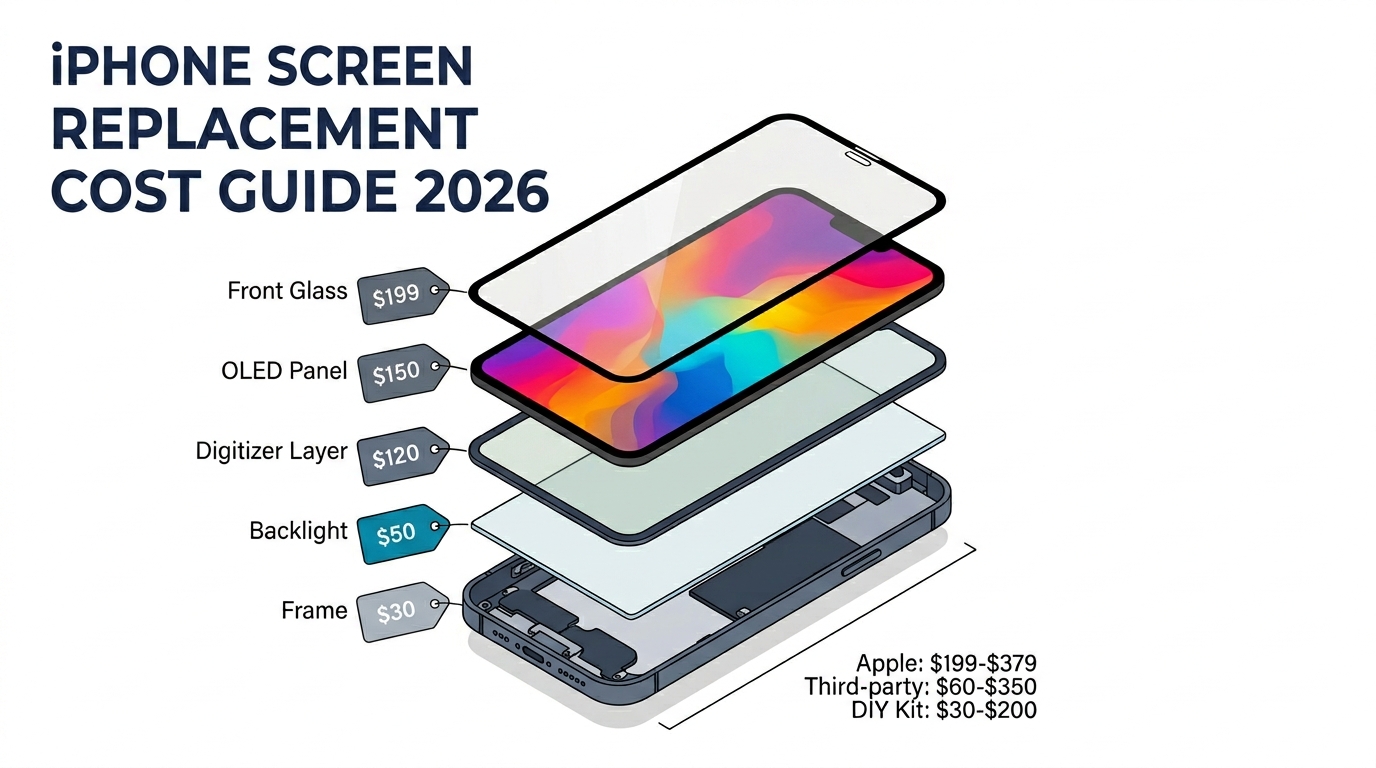
The iPhone screen replacement cost ranges from $29 with AppleCare+ to $379 at Apple's out-of-warranty rate — but the real range is even wider. Third-party shops charge $60–$350, and DIY kits start at $30. The price gap between these options is massive, and most of it comes down to one thing most guides never explain: the grade of replacement screen being used.
Apple uses genuine OEM displays. Third-party shops might use anything from a budget Incell LCD to a near-original Soft OLED. That grade difference is why one shop quotes $90 and another quotes $250 for the same iPhone 15 Pro screen replacement. Understanding what you're actually paying for helps you avoid overpaying — or getting a screen that looks noticeably worse than what you had.
This guide breaks down the real iPhone screen replacement cost by model, repair channel, and screen grade so you can make a decision based on facts rather than guesswork.
Sourcing Replacement Screens in Bulk?
Incell / Hard OLED / Soft OLED grades — wholesale pricing, grade comparison on request.
Get Wholesale QuoteiPhone Screen Replacement Cost by Model (2026)
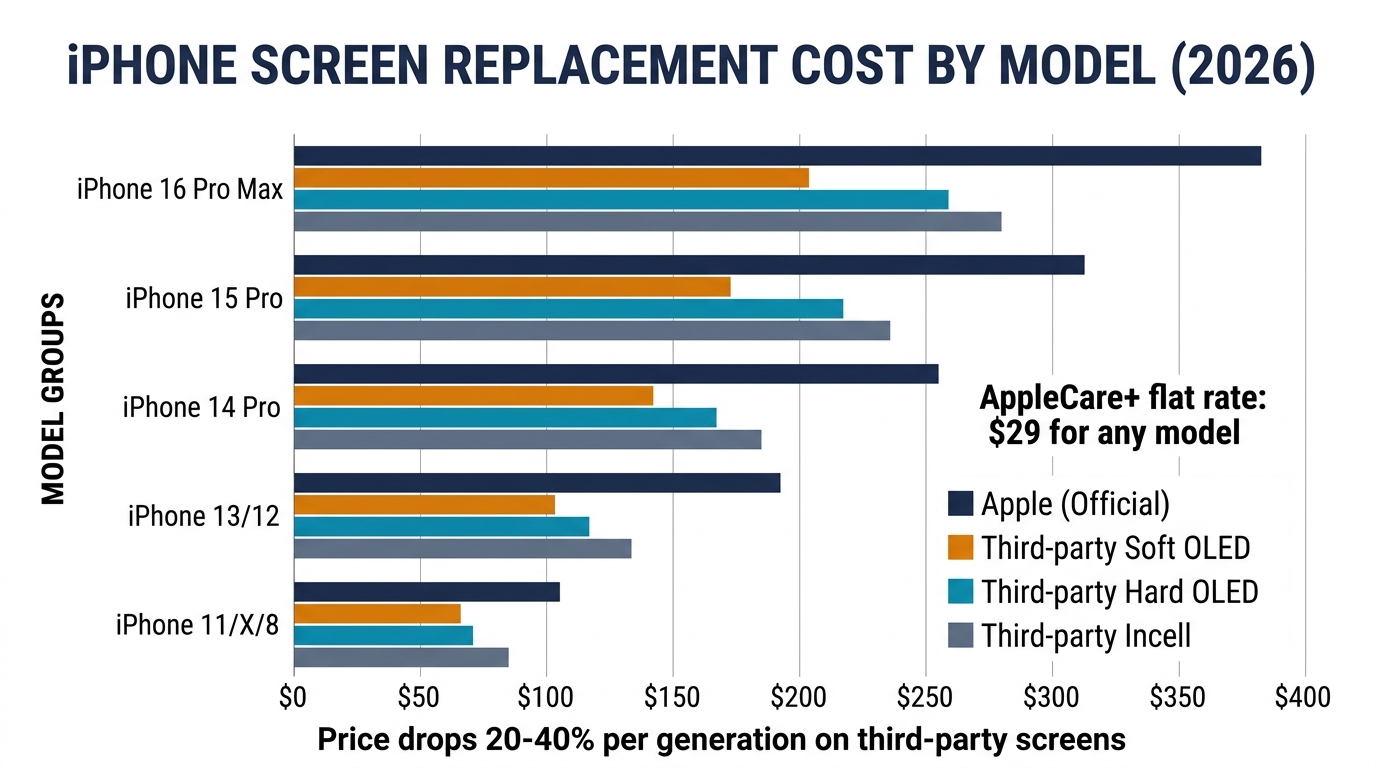
The table below shows current pricing across all three repair channels. Apple's prices are out-of-warranty rates (with AppleCare+ it drops to $29 for any model). Third-party and DIY ranges reflect the variation between screen grades — lower end uses Incell LCD, upper end uses Soft OLED or OEM-equivalent parts.
| iPhone Model | Apple (Out-of-Warranty) | Third-Party Shop | DIY Kit |
|---|---|---|---|
| iPhone 16 Pro Max | $379 | $200–$350 | $100–$190 |
| iPhone 16 Pro | $329 | $180–$300 | $90–$160 |
| iPhone 16 Plus | $329 | $170–$290 | $85–$150 |
| iPhone 16 | $279 | $150–$260 | $75–$130 |
| iPhone 15 Pro Max | $379 | $180–$320 | $90–$160 |
| iPhone 15 Pro | $329 | $160–$280 | $80–$150 |
| iPhone 15 Plus | $329 | $160–$270 | $80–$140 |
| iPhone 15 | $279 | $140–$240 | $70–$120 |
| iPhone 14 Pro Max | $379 | $160–$300 | $80–$150 |
| iPhone 14 Pro | $329 | $140–$260 | $70–$140 |
| iPhone 14 Plus | $329 | $140–$250 | $70–$130 |
| iPhone 14 | $279 | $120–$220 | $60–$110 |
| iPhone 13 Pro Max | $329 | $130–$260 | $70–$140 |
| iPhone 13 Pro | $279 | $120–$240 | $60–$130 |
| iPhone 13 | $279 | $100–$200 | $50–$110 |
| iPhone 12 Pro Max | $329 | $120–$240 | $60–$130 |
| iPhone 12 / 12 Pro | $279 | $100–$200 | $50–$120 |
| iPhone 11 Pro Max | $329 | $120–$230 | $60–$110 |
| iPhone 11 Pro | $279 | $100–$200 | $50–$100 |
| iPhone 11 | $199 | $80–$160 | $40–$80 |
| iPhone SE (3rd/2nd) | $129 | $55–$90 | $30–$60 |
Key pattern: Apple's pricing is flat per tier regardless of what replacement they use. Third-party pricing varies 2–3x within the same model because of screen grade differences. That variance is the single biggest factor most people overlook.
Why iPhone Screen Replacement Costs Vary So Much
Five factors determine what you actually pay:
1. iPhone model and display technology. Newer Pro and Pro Max models use advanced OLED panels with ProMotion (120Hz), thinner bezels, and Dynamic Island cutouts. These components cost more to manufacture and source. An iPhone 16 Pro Max screen assembly costs 3–4x more at the component level than an iPhone 11 LCD.
2. Screen grade. This is the biggest cost driver in third-party repairs and the one most consumers don't know about. A budget Incell LCD replacement for an iPhone 14 Pro might cost a repair shop $18–$25. A Soft OLED replacement for the same phone costs $55–$80. The customer experience difference is significant — more on this in the next section.
3. Repair channel. Apple charges premium prices but uses genuine parts with full calibration. Third-party shops have lower overhead and source screens at wholesale prices, passing some savings to customers. DIY eliminates labor cost entirely but adds risk.
4. AppleCare+ status. With AppleCare+ ($149–$199 for two years), every screen repair is $29 regardless of model. If you crack your screen even once during coverage, AppleCare+ pays for itself on any model from iPhone 12 upward.
5. Location and labor rates. A repair shop in Manhattan charges differently from one in a rural area. Online mail-in services can sometimes offer lower prices because of lower overhead, but you lose the convenience of same-day repair.
How Screen Grades Affect iPhone Screen Replacement Cost and Quality
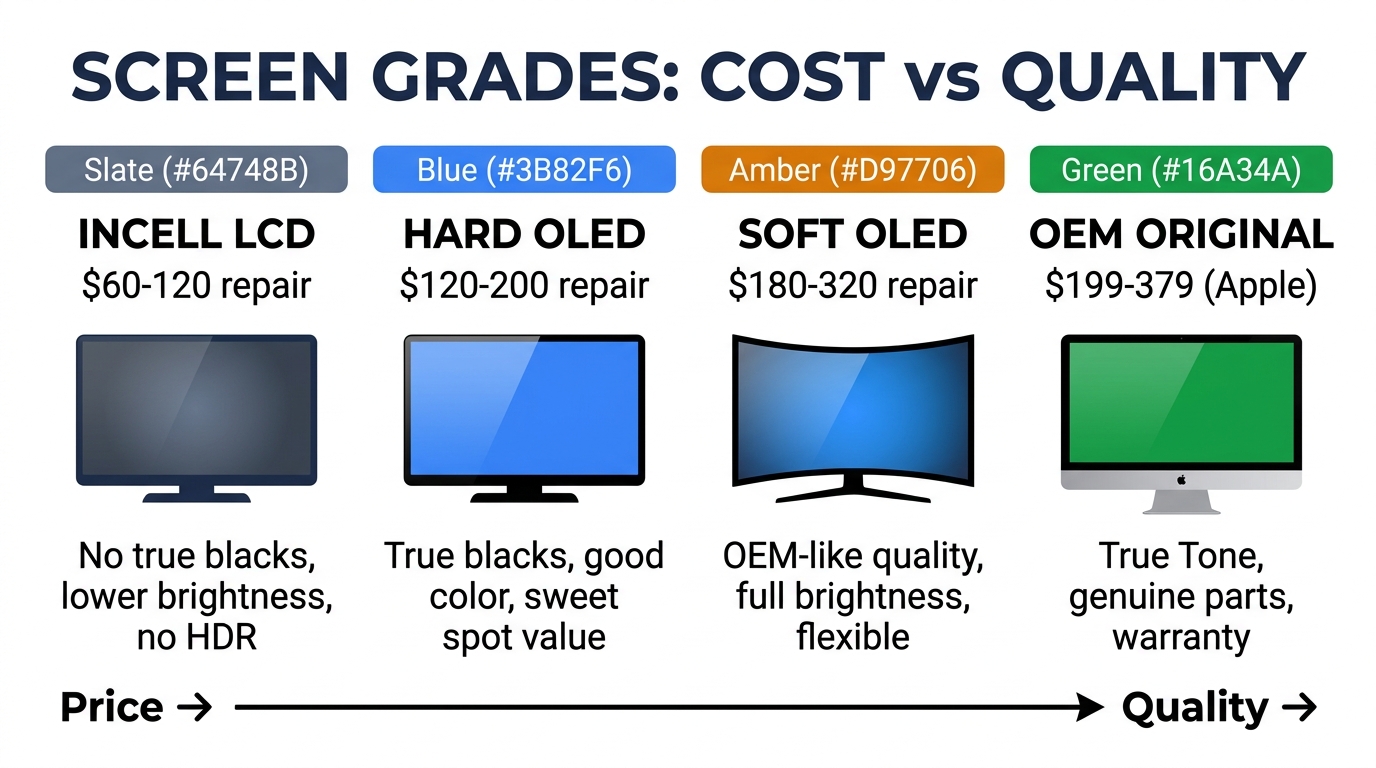
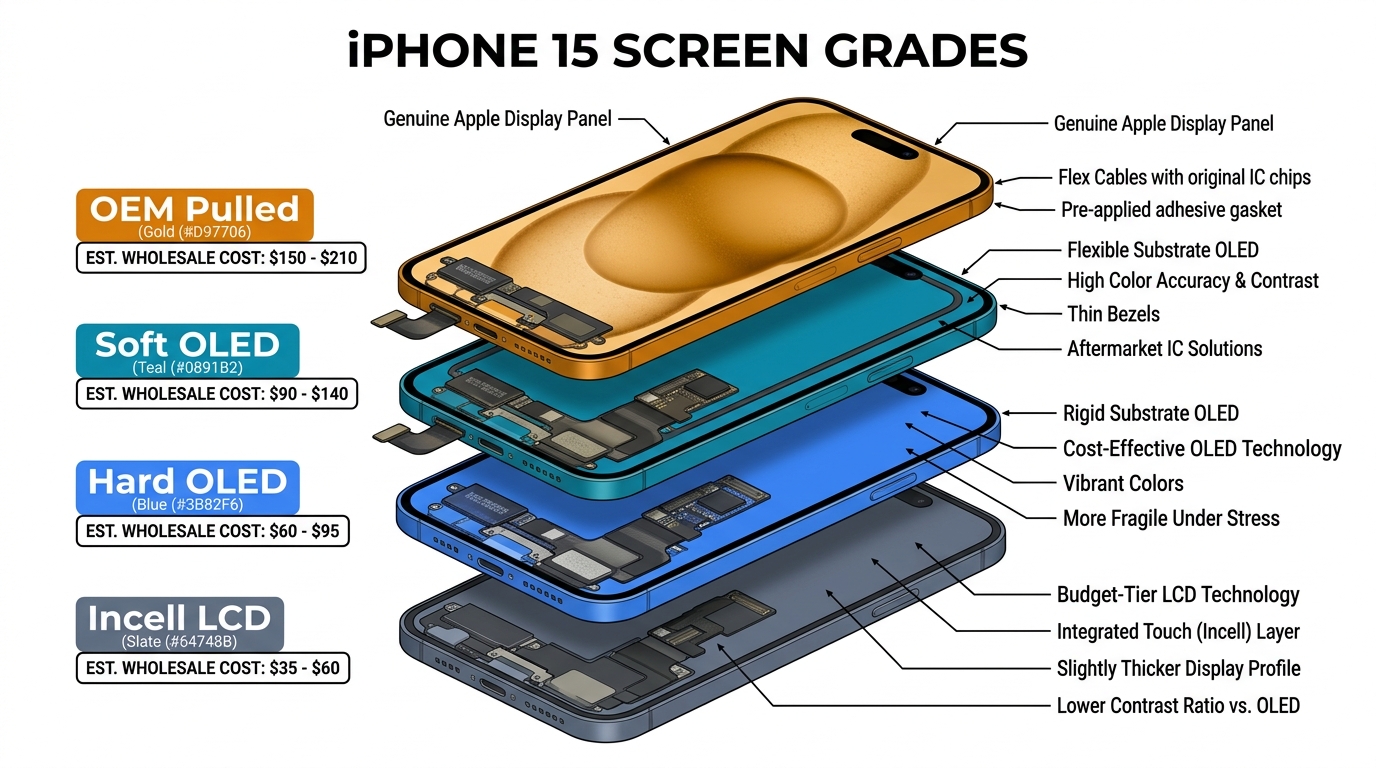
This is where the real story lives. When a third-party shop quotes you a price, the screen grade they use determines both the cost and the result you get. Here are the four main grades available for iPhone screen replacements:
Incell LCD
Cost to repair shops: $12–$30 depending on model Typical customer price: $60–$140 Best for: Budget repairs on older models (iPhone 11 and below), or customers who prioritize price over display quality
Incell LCD screens combine the touch layer and LCD panel into a single unit, making them thinner than traditional LCDs. On models that originally shipped with OLED displays (iPhone X and newer), an Incell replacement is a noticeable downgrade: lower contrast, no true blacks, slightly thicker profile, and reduced brightness. Colors look washed out in direct sunlight.
That said, for models that originally used LCD panels — iPhone 11, XR, SE — an Incell replacement is essentially the same technology and works well.
Hard OLED
Cost to repair shops: $25–$50 depending on model Typical customer price: $120–$220 Best for: Mid-tier repairs balancing quality and cost on OLED models
Hard OLED screens use a rigid glass substrate instead of the flexible plastic found in original iPhone OLED panels. The display quality is noticeably better than Incell — true blacks, strong contrast, good color accuracy. The trade-off is durability: Hard OLED panels are more prone to cracking on drop impact because the glass substrate doesn't flex.
For repair shops, Hard OLED hits a sweet spot. Customers get a screen that looks close to original at a price point that's $80–$150 below Apple's rates.
Soft OLED
Cost to repair shops: $45–$90 depending on model Typical customer price: $180–$320 Best for: Premium repairs where customers want near-original display quality
Soft OLED uses a flexible plastic substrate — the same technology as Apple's original screens. Color accuracy, brightness, viewing angles, and contrast are virtually identical to the original display. The flexible substrate also makes these screens more durable against drops.
The downside is cost. A Soft OLED screen for an iPhone 15 Pro Max costs repair shops $70–$90 at wholesale, which pushes the customer price close to Apple's official rate. The value proposition is strongest for models where Apple charges $329+ out of warranty.
OEM Refurbished (Original Reclaimed)
Cost to repair shops: $50–$110 depending on model Typical customer price: $200–$350 Best for: Customers who need original Apple display quality and True Tone preservation
These are genuine Apple display assemblies reclaimed from used or damaged phones, tested, and refurbished with new glass. They preserve features like True Tone color calibration that aftermarket screens typically lose. They're the closest you can get to an Apple repair without going through Apple.
Supply is limited and inconsistent — popular models sell out quickly. Repair shops that offer OEM Refurbished screens usually charge a premium and may have longer wait times.
Screen Grade Comparison at a Glance
| Grade | Display Quality | Durability | True Tone | Cost to Shop | Customer Price |
|---|---|---|---|---|---|
| Incell LCD | ★★☆☆☆ | ★★★★☆ | No | $12–$30 | $60–$140 |
| Hard OLED | ★★★★☆ | ★★★☆☆ | No | $25–$50 | $120–$220 |
| Soft OLED | ★★★★★ | ★★★★★ | Partial | $45–$90 | $180–$320 |
| OEM Refurbished | ★★★★★ | ★★★★★ | Yes | $50–$110 | $200–$350 |
The price gap between an Incell LCD and a Soft OLED can be $100–$180 for the same model. When a repair shop quotes you a suspiciously low price, they're almost certainly using an Incell screen. That's not necessarily bad — but you should know what you're getting.
Apple vs Third-Party vs DIY: Which Option Is Worth It?
Each channel makes sense in different situations. Here's an honest breakdown:
Apple Official Repair
When it makes sense: You have AppleCare+ (screen repair drops to $29), your phone is under warranty, or you need features like True Tone and Face ID to work flawlessly after repair.
When it doesn't: Your phone is out of warranty and you're facing a $279–$379 bill for a phone that's worth $400–$600. At that point, a third-party repair at half the cost is the pragmatic choice.
Apple's 90-day repair warranty is solid, and genuine parts mean zero compromises on display quality. The downside is turnaround time — walk-in appointments fill up quickly, and mail-in repairs take 3–7 business days.
Third-Party Repair Shops
When it makes sense: You're out of warranty, want same-day service, and are willing to choose a screen grade that matches your budget.
When it doesn't: Your phone is still under Apple warranty (third-party repairs void it), or you need guaranteed original parts for resale purposes.
The key to a good third-party experience is asking which screen grade they use. A shop that says "we use quality parts" without specifying Incell, Hard OLED, or Soft OLED is a red flag. Good shops let you choose the grade and explain the trade-offs upfront.
How to vet a third-party shop: Check Google and Yelp reviews specifically for comments about screen quality after repair. Ask whether they offer a warranty (90 days minimum is standard, good shops offer 6–12 months). Confirm they'll tell you the exact grade before starting work. Shops that source their screens from established wholesale suppliers typically deliver more consistent quality than those buying from random online marketplaces.
If you're a repair shop owner looking to source screens at competitive wholesale prices, understanding these grade differences is the foundation of your screen repair pricing strategy. The margin difference between an Incell and Hard OLED repair can be $30–$60 per job.
DIY Replacement
When it makes sense: You have steady hands, patience, and a model where the repair is well-documented (iPhone 11–15 series have excellent guides available). You're comfortable losing your warranty and potentially dealing with adhesive, tiny screws, and flex cables.
When it doesn't: You've never opened an electronic device before, or you have a newer Pro model where the repair requires specialized tools for the back glass and display calibration. See our dedicated iphone 14 pro max back glass replacement guide for the full cost breakdown across all three repair methods.
DIY screen kits typically include the display assembly, tools, and adhesive strips. Budget kits ($30–$60) use Incell screens. Premium kits ($80–$190) use Hard or Soft OLED. Factor in the value of your time — a first-time repair takes 1–2 hours.
Hidden DIY costs to consider: If you damage a flex cable or the Face ID module during replacement, the secondary repair cost can exceed what a professional would have charged in the first place. The iPhone 14 Pro and newer models have thinner ribbon cables and tighter component tolerances — the margin for error is smaller than on older devices. Apple's Self Service Repair program offers another option, but tool rental fees ($49) and part costs often bring the total close to third-party shop pricing.
What Repair Shops Actually Pay for iPhone Screens
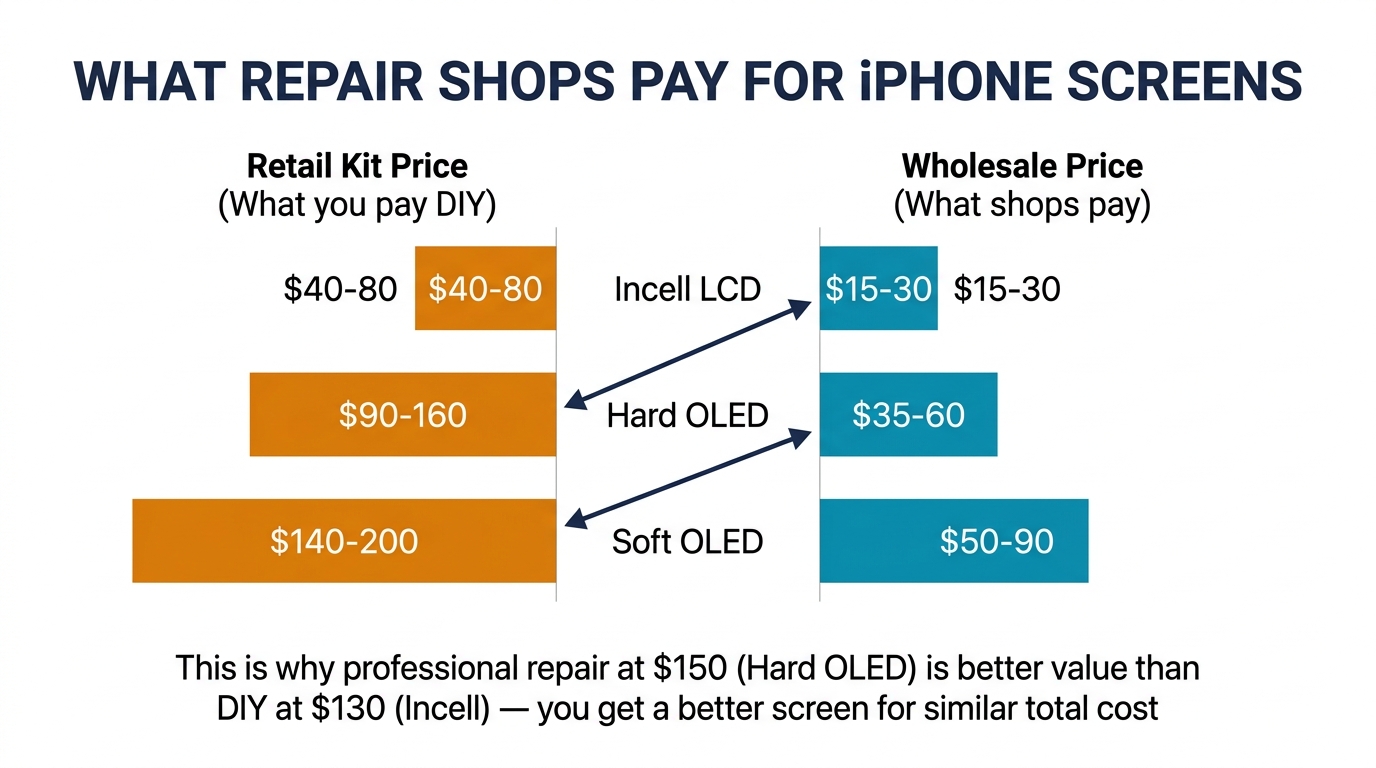
Here's what most cost guides won't tell you: the screen itself is the smallest part of what you pay at a repair shop. Understanding the cost breakdown explains why third-party repairs can be 40–60% cheaper than Apple while still being profitable.
A typical third-party screen repair price includes:
- Screen cost: 30–50% of the customer price
- Labor: 20–30% (a skilled tech replaces an iPhone screen in 15–30 minutes)
- Overhead: 15–25% (rent, tools, warranty coverage, insurance)
- Profit margin: 10–20%
For a $180 iPhone 14 Pro Hard OLED repair, the shop's screen cost is roughly $35–$45. Labor is $30–$40. The rest covers overhead and margin. That's why the same repair costs $329 at Apple — they're using a genuine $120+ display assembly plus Apple Store labor rates.
For repair shop owners: Your screen sourcing cost is the most controllable variable in your margins. The difference between buying Incell at $18 versus Hard OLED at $40 per unit is significant when multiplied across hundreds of repairs per month. Sourcing directly from wholesale suppliers rather than local distributors typically saves 15–30% per screen.
If you run a repair business and want to compare wholesale screen pricing across grades and models, we can help with bulk quotes — no minimum for sample orders, and pricing gets better at volume.
Frequently Asked Questions
Is it worth replacing a cracked iPhone screen?
For any iPhone 12 or newer, absolutely — even a $300 Soft OLED repair on an iPhone 15 Pro is far below the $700+ the phone is still worth. For an iPhone 11 or older, compare the repair cost to the phone's current trade-in value. If the repair exceeds 50% of what the phone is worth, upgrading may make more financial sense. A cracked screen also accelerates other damage — dust and moisture enter through the cracks and can damage the logic board over time.
Can I replace my iPhone screen myself?
You can, but the difficulty varies by model. iPhone SE, 11, and 12 series are relatively straightforward with good guides available. iPhone 14 Pro and newer are more complex due to the Dynamic Island, thinner flex cables, and adhesive changes. First-timers should expect 1–2 hours and should watch a complete video guide before starting.
Will Apple replace my screen for free?
Only if the damage is covered under warranty (manufacturing defect, not accidental damage) or you have AppleCare+ with incidents remaining. Accidental screen cracks are never covered under the standard warranty. With AppleCare+, you pay a $29 service fee per incident.
Does screen grade affect my iPhone's resale value?
Yes. Buyers and trade-in programs can detect non-original displays. An iPhone with an OEM or Soft OLED replacement retains more value than one with an Incell LCD. If you plan to sell within a year, investing in a higher-grade screen pays for itself at resale.
Is it cheaper to fix my screen or buy a new iPhone?
For current-generation and one-generation-old models, repair is almost always cheaper. An iPhone 15 Pro Max screen replacement at $180–$320 (third-party) versus $1,199 for a new device makes the math clear. For phones three or more generations old, the calculus shifts — a $150 repair on an iPhone 11 worth $180 leaves little margin.
The Bottom Line on iPhone Screen Replacement Cost
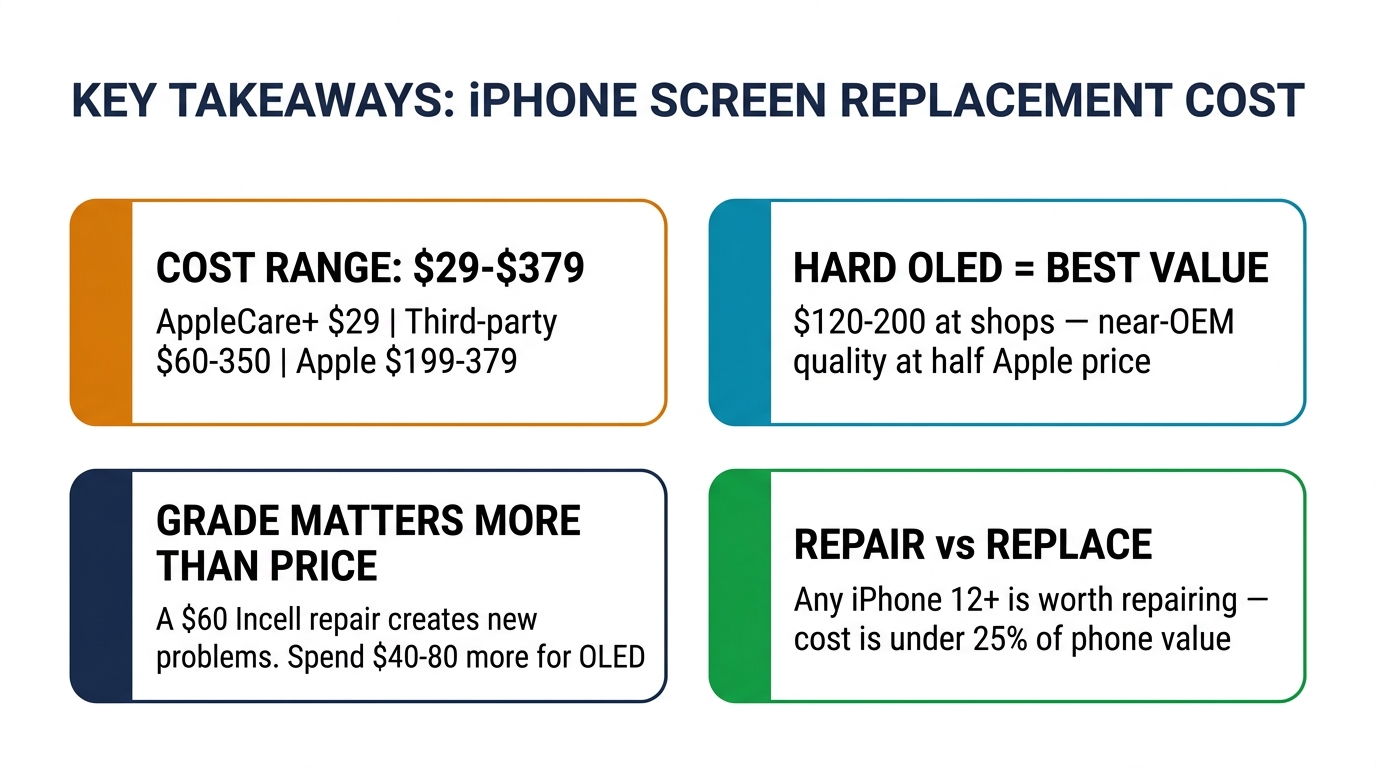
The iPhone screen replacement cost ranges from $29 (AppleCare+) to $379 (Apple out-of-warranty), with third-party repairs landing at $60–$350 depending on the screen grade used. The grade — Incell LCD, Hard OLED, Soft OLED, or OEM Refurbished — is the single biggest factor in both price and quality.
For most people with a cracked screen on an iPhone 13 or newer, a Hard OLED replacement through a reputable third-party shop offers the best balance of cost, quality, and convenience. It delivers 90% of the original display experience at roughly 50% of Apple's price.
If you're a repair shop sourcing screens for your business, the grade-to-price ratio directly shapes your profit per repair. Understanding the differences between OEM, aftermarket, and wholesale screen sourcing channels helps you build a menu that serves budget and premium customers while protecting your margins.
Need wholesale pricing on iPhone replacement screens across all grades? Request a quote — we supply Incell, Hard OLED, and Soft OLED screens for iPhone 11 through iPhone 16 series with quality inspection on every batch.