
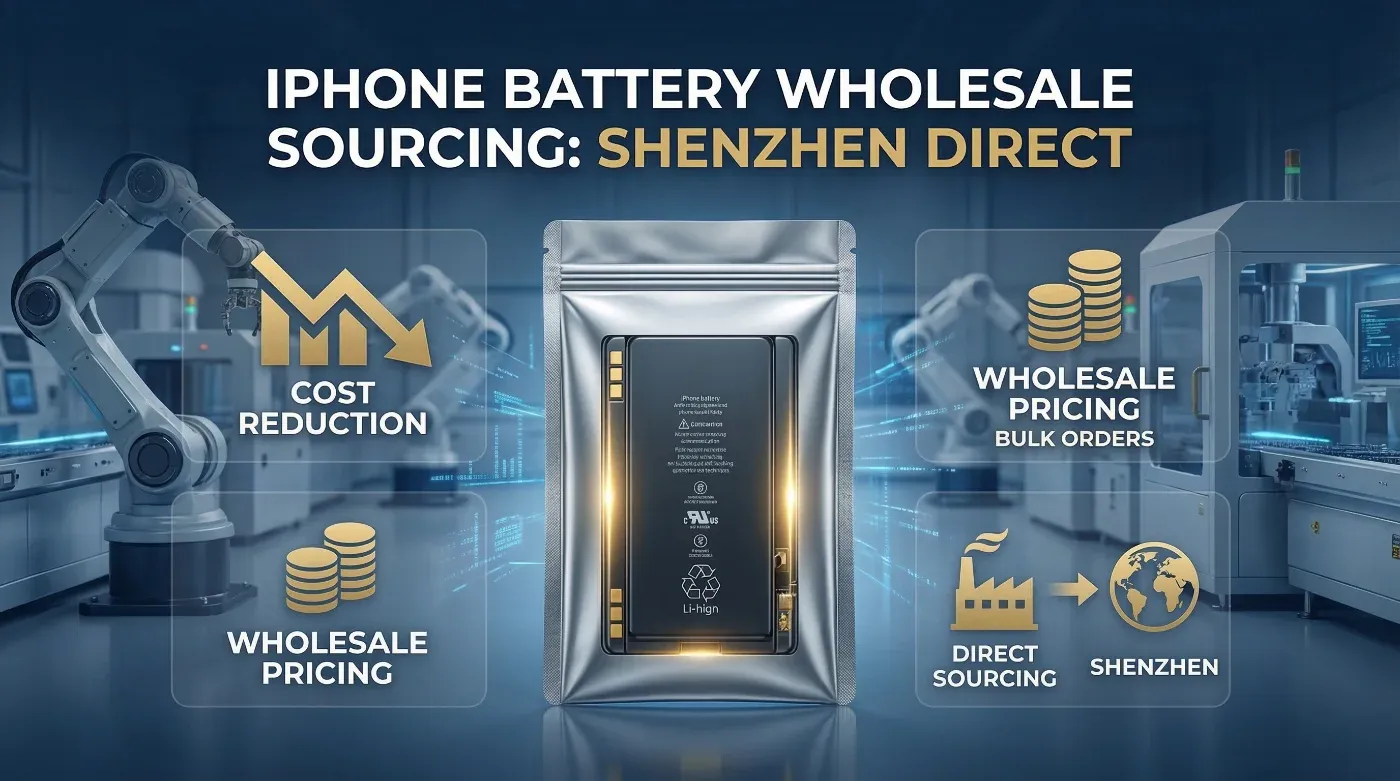
iPhone Battery Wholesale Sourcing Guide 2026: Factory-Direct from Shenzhen
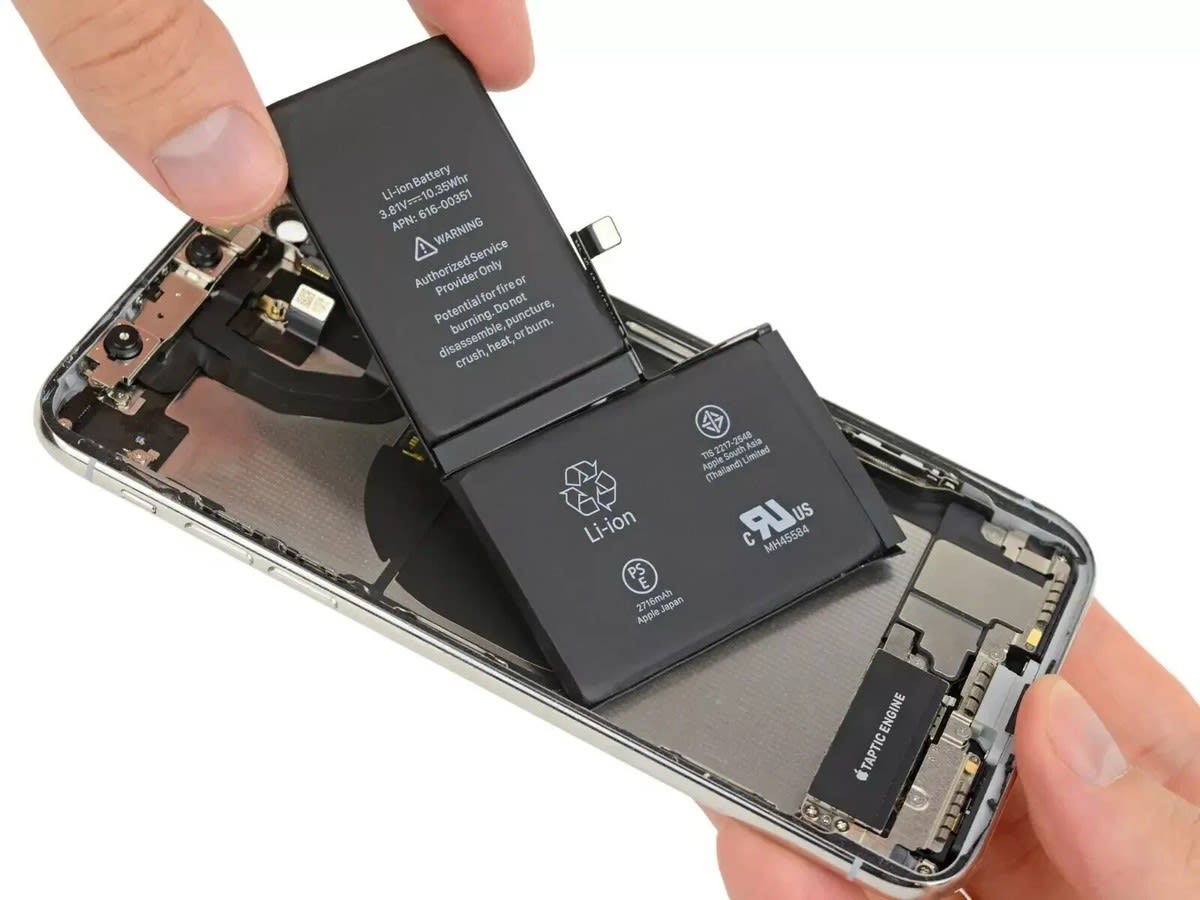
Buying Phone Batteries Wholesale?
OEM-cell batteries with safety packaging — iPhone, Samsung & more, factory-direct.
Get Wholesale QuoteTL;DR — iPhone Battery Wholesale at a Glance
Factory-direct iPhone battery wholesale prices range from $1.99 to $25 per unit in 2026, depending on quality tier and model. PRSPARES sources these batteries directly from Shenzhen factories with a 12-month warranty and tiered pricing at 10+, 50+, and 200+ units. Standard aftermarket cells run $1.99–$6.99, diagnostic batteries (no IC transfer needed) run $9–$25, and OEM-equivalent cells run $12–$18. Typical minimum order quantity is 10–50 units. Air freight delivers in 3–7 days; sea freight in 20–40 days at roughly 5–10x lower cost. Buying factory-direct removes the distributor markup, saving repair shops an estimated 15–35% versus established distributors.
New to wholesale battery sourcing? This is the hub guide. For deeper dives, jump to battery grades for bulk orders, the specs that actually matter, quality red flags to inspect, and how to stock by model.
What does it cost to buy iPhone batteries wholesale factory-direct?
Factory-direct iPhone battery wholesale pricing in 2026 ranges from $1.99 to $25 per unit, set by quality tier and model generation. For example, standard aftermarket cells for the iPhone 11 series cost $1.99–$4.49, while premium diagnostic cells for the iPhone 15–16 series reach $18–$25 because they use higher-grade cells. PRSPARES publishes these wholesale brackets openly rather than hiding them behind quote games. Our data shows that, across 10+ years of Shenzhen sourcing, repair shops ordering 50+ units monthly save the most, because volume unlocks the 15% and 20% pricing tiers. In practice, a shop replacing 50 batteries a month sources standard cells near $3.49 and diagnostic cells near $12, protecting repair margins. Minimum order quantity stays low, typically 10–50 units, so smaller shops can still buy factory-direct without committing to distributor-scale volume first. If you are weighing whether a swap is even worth it for a customer, our iPhone battery replacement cost breakdown compares Apple, third-party, and wholesale economics across every model.
Why source iPhone batteries directly from Shenzhen?
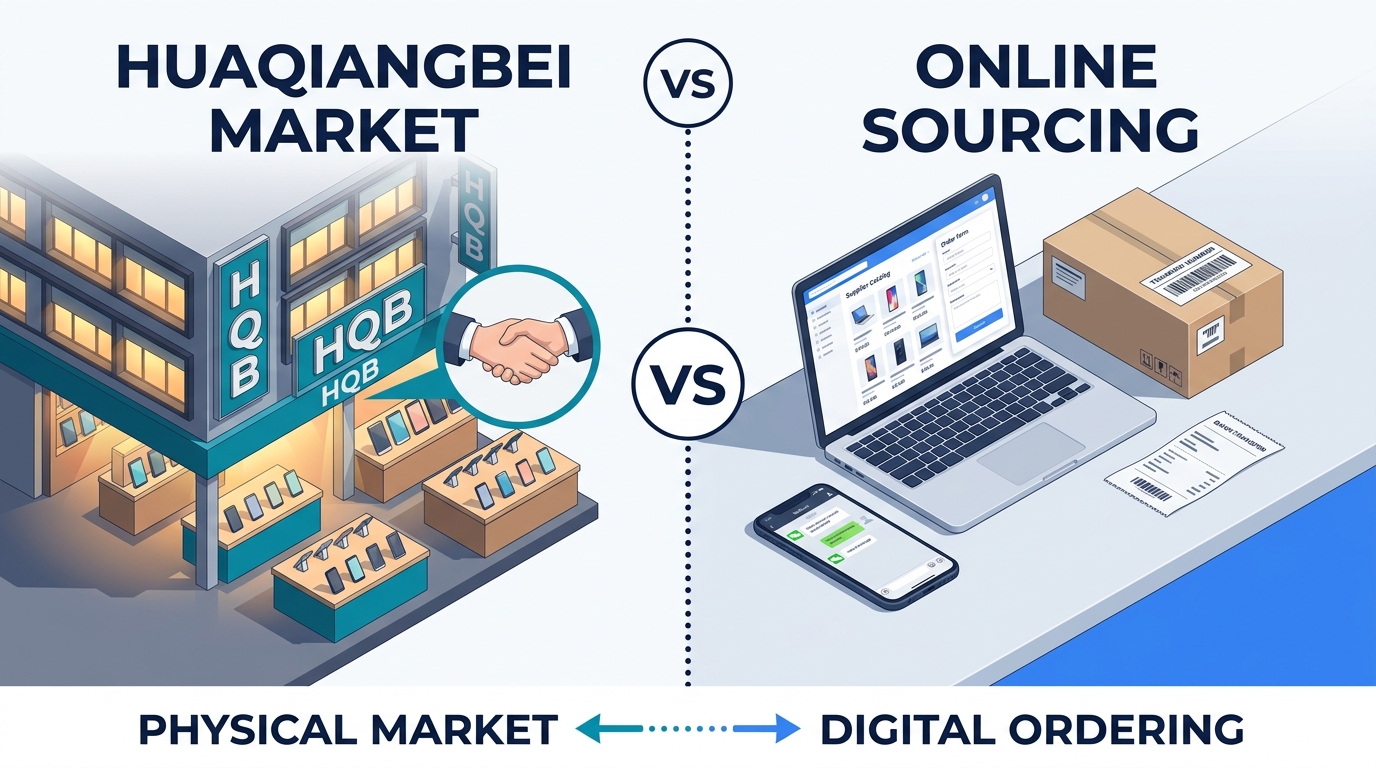
Sourcing iPhone batteries directly from Shenzhen removes the distributor middle layer and saves repair shops an estimated 15–35% per unit. Shenzhen and the Huaqiangbei district form the densest mobile-parts manufacturing cluster in the world, with complete supply-chain integration from lithium cells to finished, safety-packaged batteries. PRSPARES has sourced from these factories for 10+ years, giving buyers direct access to mature cell manufacturers without trading-company markup. Our QC data shows the main risk in this market is mislabeled grade, not raw availability. In practice, that is why we run incoming QC on every batch and back parts with a 12-month warranty: factory-direct only protects your margin if grade and quality stay consistent. For a US or UK shop reordering monthly, this combination of factory pricing, QC, and warranty is what keeps the defect-driven re-do rate low.
We have seen first-hand how costly the gap between a clean spec sheet and real-world behavior can be. A European buyer we worked with had sourced a battery batch from a factory whose BMS (battery management system) was poorly configured — the protection circuit misfired, causing false power cutoffs and accelerating capacity fade. Once the batteries were installed, the shop was hit with a wave of end-user complaints about phones running hot and draining fast, and the entire batch had to be pulled from service. The cells looked fine on paper; the failure was in the BMS tuning — exactly the kind of defect a printed capacity rating never reveals. That is why we verify real-world behavior, not just the label, on every incoming batch. For the checks that catch this, see the battery specs that actually matter and the quality red flags wholesale buyers must inspect.
What are the three iPhone battery quality tiers?

iPhone battery wholesale splits into three quality tiers, and knowing them is the single biggest defense against overpaying or under-delivering. Tier 1, basic aftermarket ($1.99–$4.99): Chinese-cell batteries retaining roughly 85–90% capacity that may trigger iOS battery-health warnings. Tier 2, standard diagnostic ($9–$15): cells with pre-programmed authentication chips that display "100% Maximum Capacity" and need no IC transfer during installation. Tier 3, premium diagnostic ($15–$25): cells from mature, established manufacturers retaining 95–100% capacity with a 500+ cycle lifespan. All grades ship in neutral packaging so you can brand or re-box as your business requires. For example, a high-volume shop might stock Tier 1 for budget repairs and Tier 3 for premium customers. We found the grade gap between Tier 1 and Tier 3 is exactly where unreliable suppliers blur labels, so PRSPARES documents each tier against its real cell source — see how repair shops pick a grade for bulk orders for the full decision framework. Additionally, our data shows clear tier labels cut the re-do rate that quietly erodes shop margin.
What is a diagnostic battery, and is it worth the higher price?
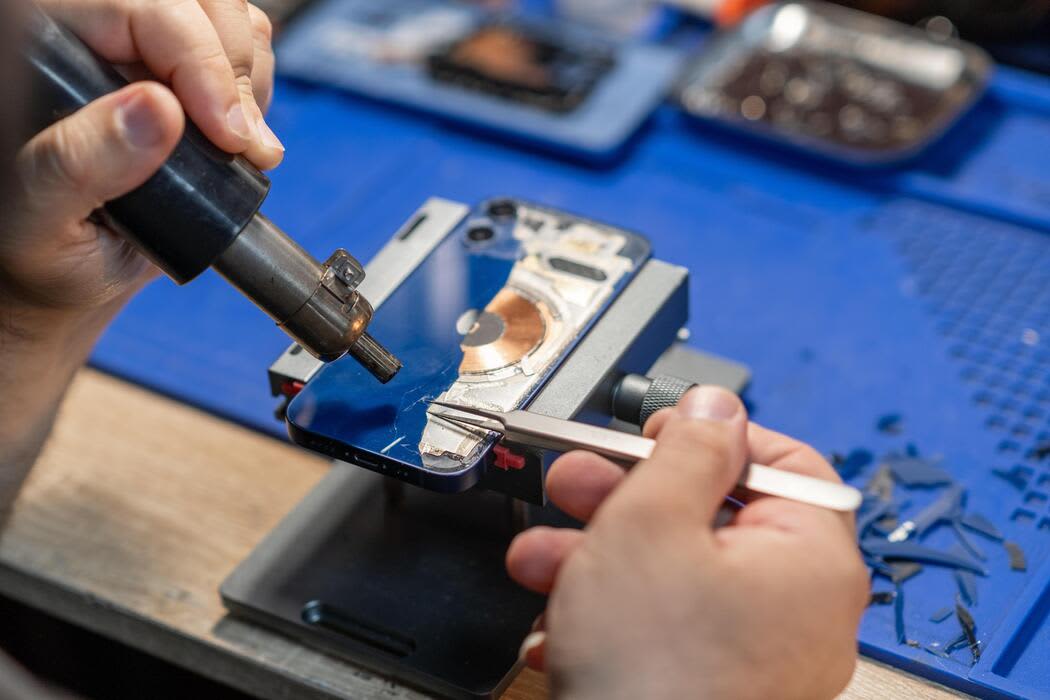
A diagnostic battery is an iPhone battery that incorporates a pre-programmed authentication chip satisfying Apple's verification check, so installation needs no IC transfer or specialized soldering. This single feature saves 10–15 minutes per repair and lowers the skill threshold for your technicians. The economics are closer than the sticker price suggests. For example, a traditional standard battery costs $4.00 but adds 30–45 minutes of IC-transfer labor — at $25/hour that is $12.50–$18.75, pushing total cost to roughly $18.50–$24.75. A diagnostic battery costs $12–$18 but installs in 15–25 minutes, landing total cost near $18.25–$28.42. In practice, diagnostic batteries win for high-throughput shops where technician time is the bottleneck, while standard cells stay cheaper for low-volume or price-sensitive jobs. Diagnostic-battery adoption reached an estimated 40–50% of the aftermarket by 2026.
Which iPhone battery models should you stock — and where do they sit on price?
Not every model deserves the same wholesale commitment. The cheapest cells per unit are older, high-volume models (iPhone 11/XR-era), where standard aftermarket runs $1.99–$4.49 and demand stays high because those phones dominate the repair queue. Mid-generation models (iPhone 12/13) sit in the middle of the price band and are the safest "always stock" tier for most shops. The newest models (iPhone 14/15/16) cost the most — often diagnostic-only at $18–$25 — because cell sourcing is tighter and the authentication chip is effectively required to avoid the iOS "Unknown Part" warning.
From our own order data, the three highest-repeat iPhone battery models are the iPhone 13, iPhone 12, and iPhone SE (3rd generation). The 13 and 12 sit in the sweet spot of a massive installed base whose original batteries are now aging into replacement territory, while SE 3 units tend to be heavy-use phones that cycle their batteries fast. A practical rule: if you deep-stock only three iPhone battery SKUs, start with the 13, 12, and SE 3; stock older models steady, and order the newest models lean (per job) until volume justifies a tier. We break the full lineup down phone-by-phone in how repair shops should stock iPhone batteries by model in 2026.
How does PRSPARES tiered wholesale pricing work?
PRSPARES wholesale pricing uses transparent volume tiers that discount the unit price as order size grows, with no opaque quote negotiation. Orders of 1–10 units pay the base price, 11–20 units earn roughly 10% off, 21–50 units about 15% off, 51–100 units around 20% off, and 100+ units 25%+ off. This structure maps directly to the 10+, 50+, and 200+ brackets repair shops and distributors plan around. For example, a distributor consolidating iPhone, Samsung, and Xiaomi batteries into a single 200+ order reaches the deepest tier across brands at once. Our data shows predictable tier pricing matters more to buyers than a one-time discount, because it lets them quote their own jobs and resell with stable margins. In practice, shops use the published tiers to forecast cost-of-goods before they place the order, rather than waiting on a sales reply.
How are wholesale phone batteries shipped internationally?

Wholesale phone batteries ship by two main methods, and the choice trades transit time against cost. Express air freight delivers in 3–7 days at roughly $8–$15/kg, suited to urgent restocks. Sea freight takes 20–40 days but costs 5–10x less per kilogram, suited to bulk planned orders. Because batteries are classed as dangerous goods, every shipment requires UN38.3 certification, a state of charge at or below 30% for air transport, and proper hazardous-goods packaging. For example, a US shop needing 50 batteries this week chooses air, while a distributor stocking 500 for next quarter chooses sea and absorbs the longer lead time. In practice, PRSPARES safety-packages every battery to these standards before dispatch, because a shipment held or rejected at customs costs far more than the freight saved.
How do you verify battery quality before a bulk order?
The safest way to source iPhone batteries wholesale is to validate grade and warranty with a factory-direct supplier before scaling, not to chase the lowest listing on a marketplace. Follow five steps. First, request samples — order 5–10 units at roughly $2–$25 each and test capacity, IC behavior, and fit against the grade you were quoted. Second, confirm the exact grade and cell source in writing, so "OEM" and "aftermarket" are not used loosely. Third, check the warranty terms and after-sales repair standard before committing. Fourth, place a pilot order at the minimum 10-unit MOQ and track real DOA and field-return rates. Fifth, scale into the 50+ or 200+ tier once quality holds. We found this sample-first path is the cleanest defense against mislabeled stock in 2026.
Two checks deserve special attention on a first order. A "0 cycle count" reading does not prove a battery is new — resets are a known scam, and we show how to catch them in battery reset scams: how to check if a battery is really new. And the spec sheet matters more than the label: which battery specs actually matter and the quality red flags wholesale buyers must inspect cover the capacity, IC, and swelling checks that separate a good batch from a costly one. In practice, PRSPARES supports a sample-first path with low MOQs, documented grades, incoming QC, and a 12-month warranty, so a new buyer verifies quality on a small order before trusting us with monthly volume.
What warranty and after-sales protection should you expect?
Every PRSPARES battery carries a 12-month warranty plus a defined after-sales repair standard, which is the protection that separates a factory-direct partner from an anonymous marketplace seller. Warranty coverage matters because even good aftermarket cells can show batch variability, and a shop cannot absorb the labor cost of re-dos on dead units. For example, if a $12 diagnostic battery fails inside the coverage window, the warranty process replaces it rather than leaving the shop to eat the loss. Our data shows clear written terms reduce disputes far more than verbal "guarantees" in 2026. Additionally, international buyers in the US, UK, and EU should always confirm three things before ordering: the warranty length, the claim process for cross-border returns, and whether incoming QC is actually performed. PRSPARES documents all three, because a 12-month warranty only protects margin if the claim path is real.
Frequently asked questions about iPhone battery wholesale
What is the minimum order quantity for wholesale iPhone batteries? Typical MOQ is 10–50 units, and PRSPARES supports a low 10-unit entry so smaller shops can buy factory-direct and run a quality test before scaling to the 50+ or 200+ tiers.
How much do iPhone batteries cost wholesale in 2026? Factory-direct prices run $1.99–$25 per unit: standard aftermarket $1.99–$6.99, standard diagnostic $9–$15, and premium diagnostic $15–$25, with volume tiers cutting 10–25%+ as order size grows.
What is a diagnostic battery and do I need one? A diagnostic battery has a pre-programmed authentication chip, so it installs with no IC transfer and shows correct battery health in iOS. It is effectively required on iPhone 14/15/16 to avoid the "Unknown Part" warning and saves 10–15 minutes of labor per repair.
Can I trust a "0 cycle count" reading to mean the battery is new? No. Cycle counts can be reset. Verify newness with hardware-level checks and batch testing — see our battery reset scam guide.
Do wholesale batteries come with a warranty for international buyers? Yes — PRSPARES backs every battery with a 12-month warranty and a defined cross-border after-sales repair standard. Confirm warranty length, claim process, and incoming QC before ordering from any supplier.
Ready to source iPhone batteries factory-direct?
PRSPARES supplies OEM-cell and diagnostic iPhone, Samsung, and Android batteries with safety packaging, factory-direct pricing, a 12-month warranty, and transparent 10+/50+/200+ tiers — all in neutral packaging. Browse the wholesale battery range or Get a Wholesale Quote →.