

When Customers Demand Refunds: A Repair Shop's Survival Script
"Every. Single. Time."
That's how u/ItsDobby on r/mobilerepair described the moment a customer walks back in with a shattered screen: "I dropped it on a carpet from 10 cm height — the screen you put on broke instantly."
If you've owned a phone repair shop for more than six months, you need a repair shop refund policy that actually works — because you've had this conversation. The screen that "cracked overnight from nothing." The guy who blames your install for a hard OLED panel that shattered on impact. The boyfriend who paid for the repair and wants his money back because they broke up.
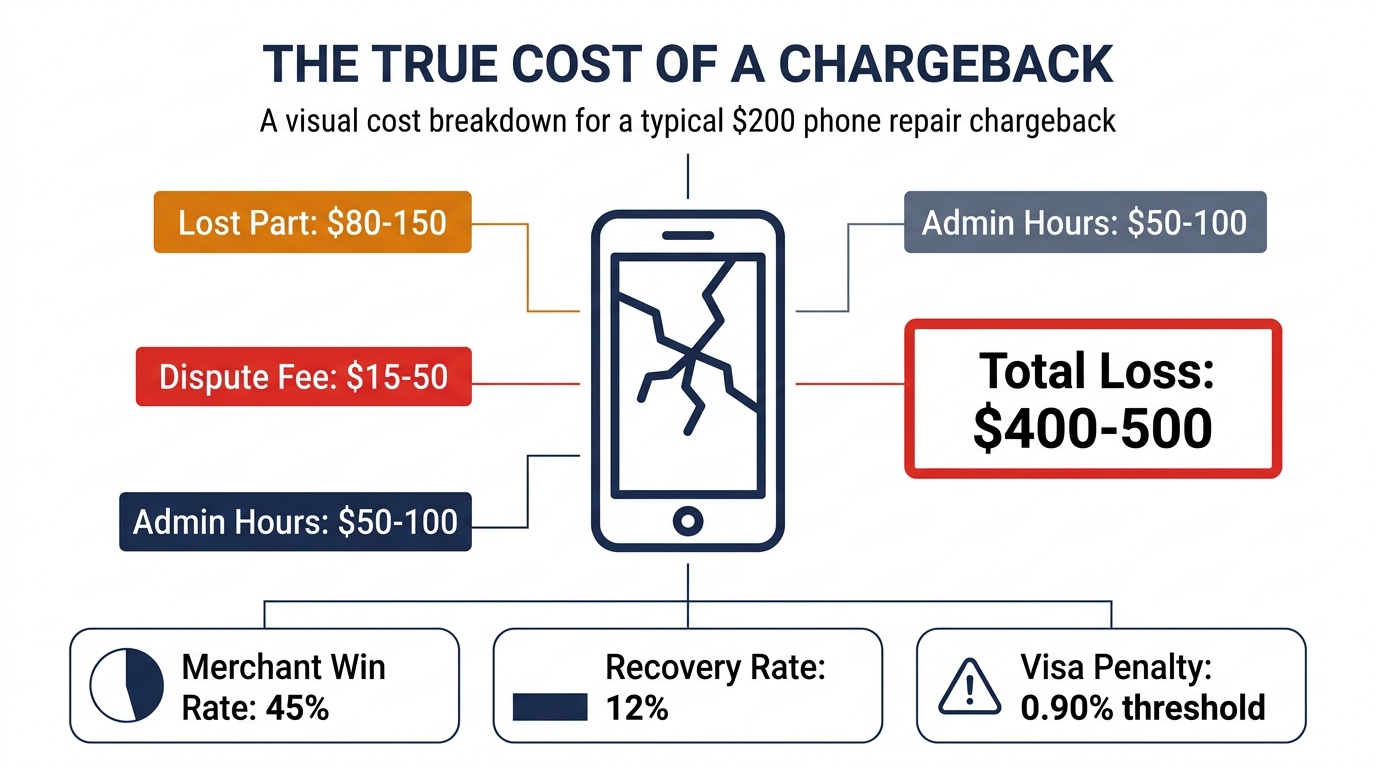
Here's what makes these disputes dangerous: a third-party screen replacement runs $150–$350 at most independent shops. A single chargeback on that repair doesn't cost you $200 — it costs $400–$500 when you factor in the lost part, the $15–50 dispute fee, and hours of admin. Merchants only win 45% of chargeback disputes. Recovery rate? Just 12%. Visa flags your business at a 0.90% chargeback rate and can fine you up to $25,000/month.
But most disputes follow five predictable patterns. Experienced shop owners — the ones who've been doing this for 10, 14, 17 years — have developed responses that actually work. This article gives you their scripts, the intake form that can prevent most disputes from starting, and the legal basics you need to protect your business.
Need Wholesale Phone Repair Parts?
Factory-direct pricing from Shenzhen — OEM-quality screens, batteries & small parts.
Get Wholesale QuoteThe 5 Dispute Patterns (and the Scripts That Defuse Them)
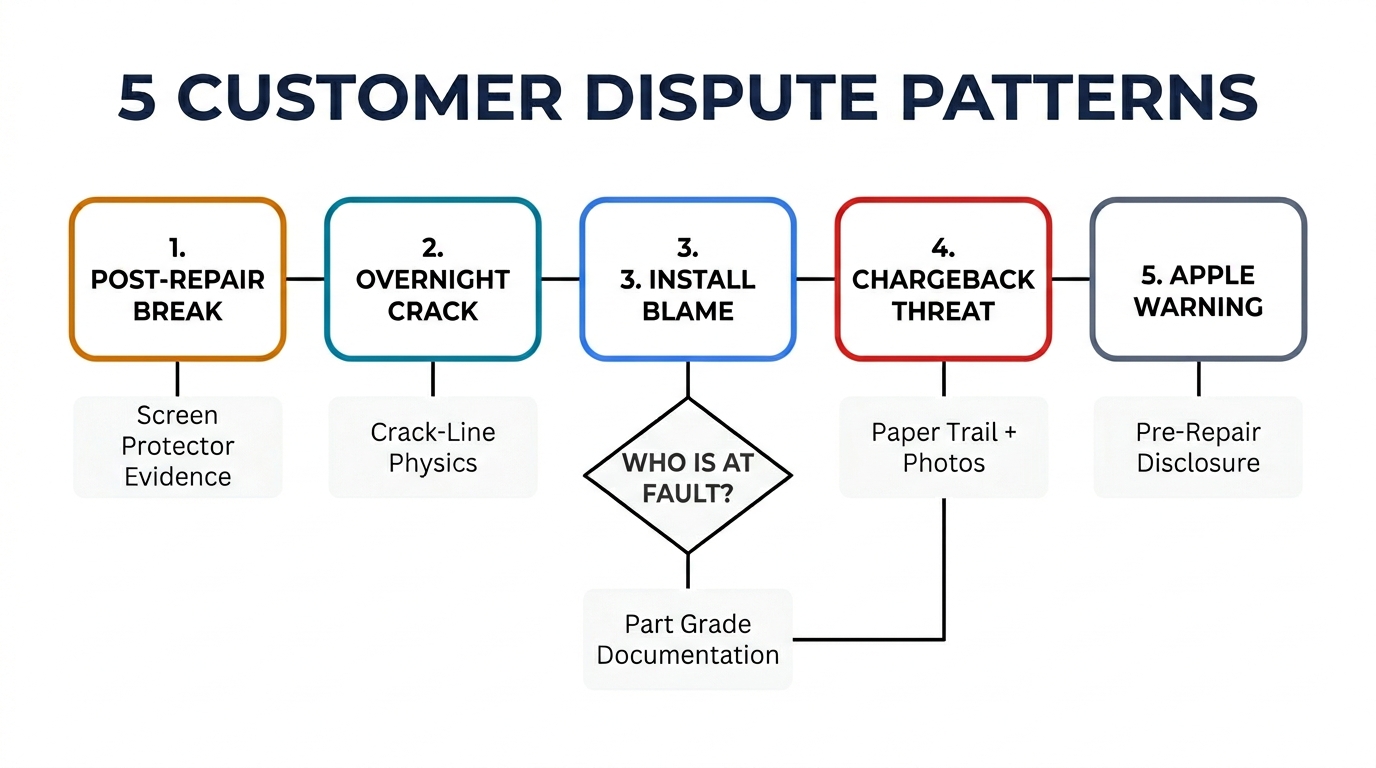
1. "It Broke Right After I Left" — The Carpet-from-10cm Classic
The most common dispute. Customer returns within hours or days, cracked screen, creative backstory.
What they say: "I barely dropped it on carpet. Your screen must be defective."
What actually happened: They dropped it. As one shop owner put it: "At least they still admit dropping it. Some just say they woke up to a broken screen."
As one 14-year veteran tech put it: "I've been doing phone repairs for the last 14 years and have heard all excuses. She dropped the phone and wants a freebie. If she's adamant the screen cracked on its own she might need an exorcist and not a technician."
The $1 trick that ends the argument:
One technician shared this approach: "I put free protection glass on all my screen repairs. The customer comes in with the classic ink spots and lines — 'I never dropped it,' he says, while I see at least 5 chips on the protection glass I put on. I pointed that out to him and he paid."
A $0.50–1.00 screen protector becomes your built-in impact detector. Chips on the protector = the phone was dropped. No argument needed.
Your script:
- "Let me look at the screen protector and impact pattern — that'll tell us what happened."
- If protector shows impact: "I can see impact marks here. This is physical damage, which isn't covered under our parts warranty. But I can redo the screen at cost — just the part, no labor."
2. "The Screen Cracked Overnight From Nothing"
Harder than Scenario 1 because the customer genuinely believes it. They left the phone charging, picked it up in the morning, found a crack with white flashing along the fracture line.
The real case: A customer said she was scrolling social media when "the screen started flashing white around the same place as the crack." She wanted a full refund on a genuine screen installed 3 weeks prior.
What experienced techs say:
The top-voted response on r/mobilerepair was blunt: "Remember, screens don't crack on their own, or from removing a screen protector. She's dropped it."
One commenter referenced Louis Rossmann's approach: "A woman said 'you fitted this screen a week ago and now it's cracked again.' He said, watch that window for 5 seconds... 'Did you notice it didn't break?' She said yes. 'That's because nothing happened to it.'"
Another tech gave the technical explanation you can use with customers: "If the white flashing is exactly at the crack, she caused it. No matter if the flashing came later on a random moment, it could still be caused by that crack."
Your script:
- "See this crack line? The display is flashing white exactly along it. That means the panel was physically stressed at this specific point. A manufacturing defect would cause uniform discoloration across the whole screen — not a line pattern following a crack."
- Show your intake photos: "Here's the screen when you picked it up — no crack. The damage happened after you left."
3. "Your Install Caused This" — The Hard OLED Problem
This scenario is tricky because the shop is sometimes partially at fault — not from bad technique, but from part selection.
The real case: A customer returned one week after an iPhone 11 Pro OLED replacement. Display was dead. The tech confirmed correct screws and procedure. He was already eating the cost: "I'm re-doing this job at part-price since it has only been one week."
What the community diagnosed:
The top response: "It's just bad quality hard OLED panel. Breaks from the slightest drop and kills the entire display. Use soft OLED or LCD if the customer doesn't want to pay extra."
Another experienced tech gave the honest take: "They dropped the phone. But the display was also a low-quality panel."
Multiple commenters agreed: "Hard OLED should not be sold. It's one of the worst types." The consensus was clear — hard OLED is cheap but catastrophically fragile.
The real repair shop refund policy lesson: the dispute starts at part selection, not at the counter after it breaks. If you let the customer choose the cheaper panel without explaining the trade-off, you own part of the outcome.
Your script (before repair):
- "We have two screen options. The standard panel is more affordable but more fragile — a drop that your original screen might survive could crack this one. The premium soft OLED is more durable. Which would you prefer?"
- Document their choice with initials on the work order.
Your script (when they return):
- If they chose cheap + it broke from impact: "You chose the standard panel, and as we discussed, it's less impact-resistant. I can upgrade you to soft OLED at a discounted rate."
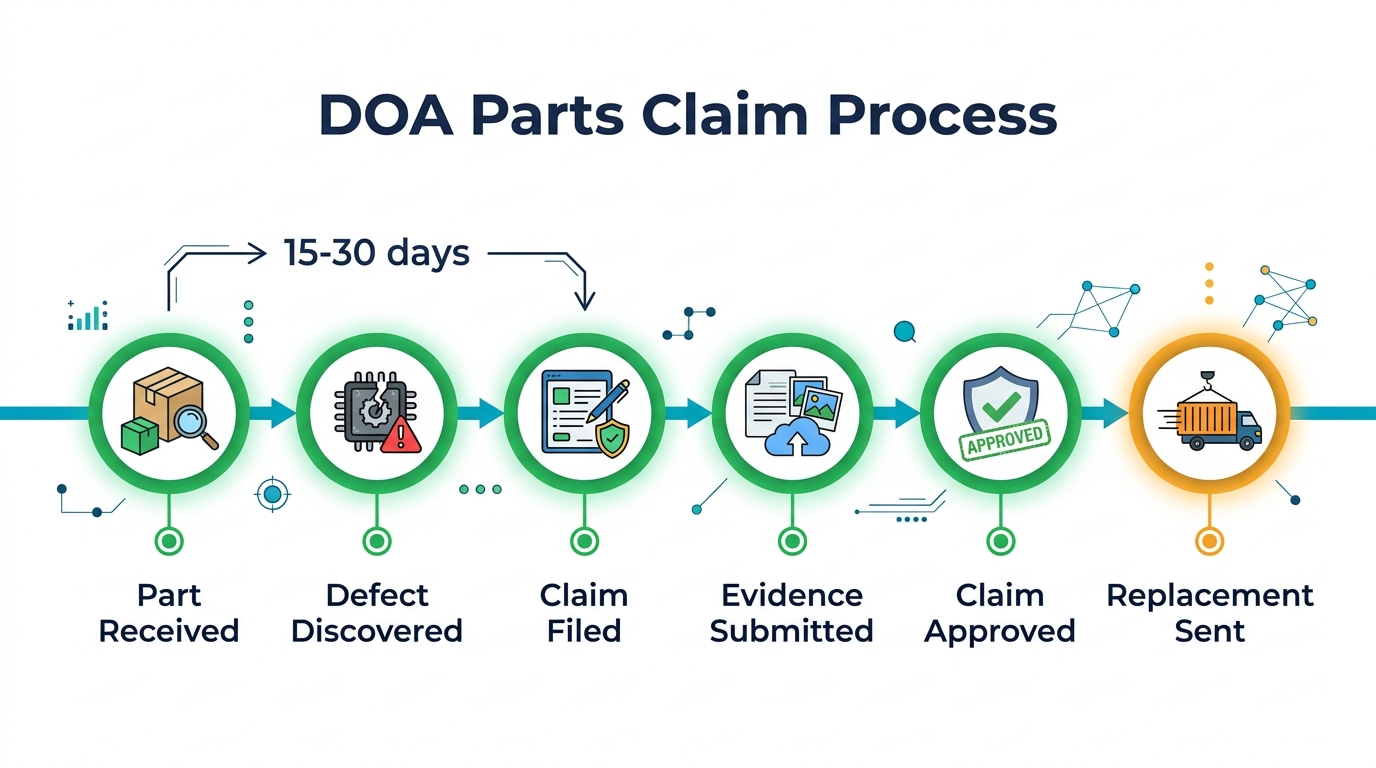
- If the part is genuinely defective (no drop, within warranty): Replace it. That's your supplier's DOA policy working for you.
4. "I'm Calling My Bank" — The Chargeback
This is where disputes get expensive fast.
The real case: A shop owner described a data recovery service on a severely water-damaged iPhone. Customer agreed to terms in writing — "We clearly stated it wouldn't be a functional phone and only to allow data to be backed up." Customer filed a chargeback anyway, claiming the device "doesn't work fully."
The r/mobilerepair community was reassuring: "Been there done that hundred times at my shop, they will rule in your favor if you did your job right." But another commenter warned: "Bullies love weak prey. They most likely read your terms and saw an opening they could exploit."
The math that matters:
| Metric | Number | Source |
|---|---|---|
| Average chargeback fee | $15–$50 per incident | Mastercard |
| True cost multiplier | 2–2.5x the transaction | Signifyd |
| A $200 repair chargeback costs you | $400–$500 total | Part + fee + labor + admin |
| Merchant win rate | 45% | Chargeflow |
| Revenue recovery rate | 12% | Industry average |
| Visa penalty threshold | 0.90% chargeback rate | Up to $25K/month fines |
Prevention is the only real answer. One experienced owner was direct: "Two words. Cash. Only. Liquid damage waiver signed at check-in and a non-refundable deposit paid in cash at the time of signing."
For shops that need to accept cards (most do), your evidence package per Mastercard's official merchant dispute guidelines needs:
- Signed work order with itemized services and pricing
- Before/during/after photos of the device
- Customer signature on pickup receipt
- SMS or email trail showing customer approved scope and price
- Diagnostic notes documenting pre-existing damage and IMEI
- Written communication where customer acknowledged terms
Louis Rossmann — who runs one of the most-watched repair shop channels on YouTube with 2M+ subscribers — has documented chargeback disputes on camera, showing exactly how paper trails saved him. His video on call recording for price disputes (16K views) is worth watching for the real-world tactics.
Your script: "I understand you're frustrated. Let me email you a summary of the work we did, the terms you agreed to, and the repair photos. If you still want to dispute with your bank, that's your right — we'll provide all this documentation to the bank as well."
5. "Apple Says It's Not Original"
Post-iOS 15, Apple displays "Unable to verify this iPhone has a genuine Apple display" on any third-party screen. Customers see this and assume you installed a counterfeit part.
Your script (before repair): "After the replacement, you'll see a notification from Apple saying the display can't be verified as genuine. This shows up on ALL third-party screens — even OEM-equivalent ones. It doesn't affect brightness, touch response, or color accuracy."
Your script (when they return upset): "That message is Apple's way of flagging any screen not installed through their authorized program. The display itself is working correctly. Want me to walk you through Settings > About to confirm everything checks out?"
Put it on the intake form. Add a checkbox: "Customer acknowledges that iOS may display a non-genuine part notification after third-party screen replacement. This does not indicate a defective part."
Your Repair Shop Refund Policy Starts Here: The Intake Form
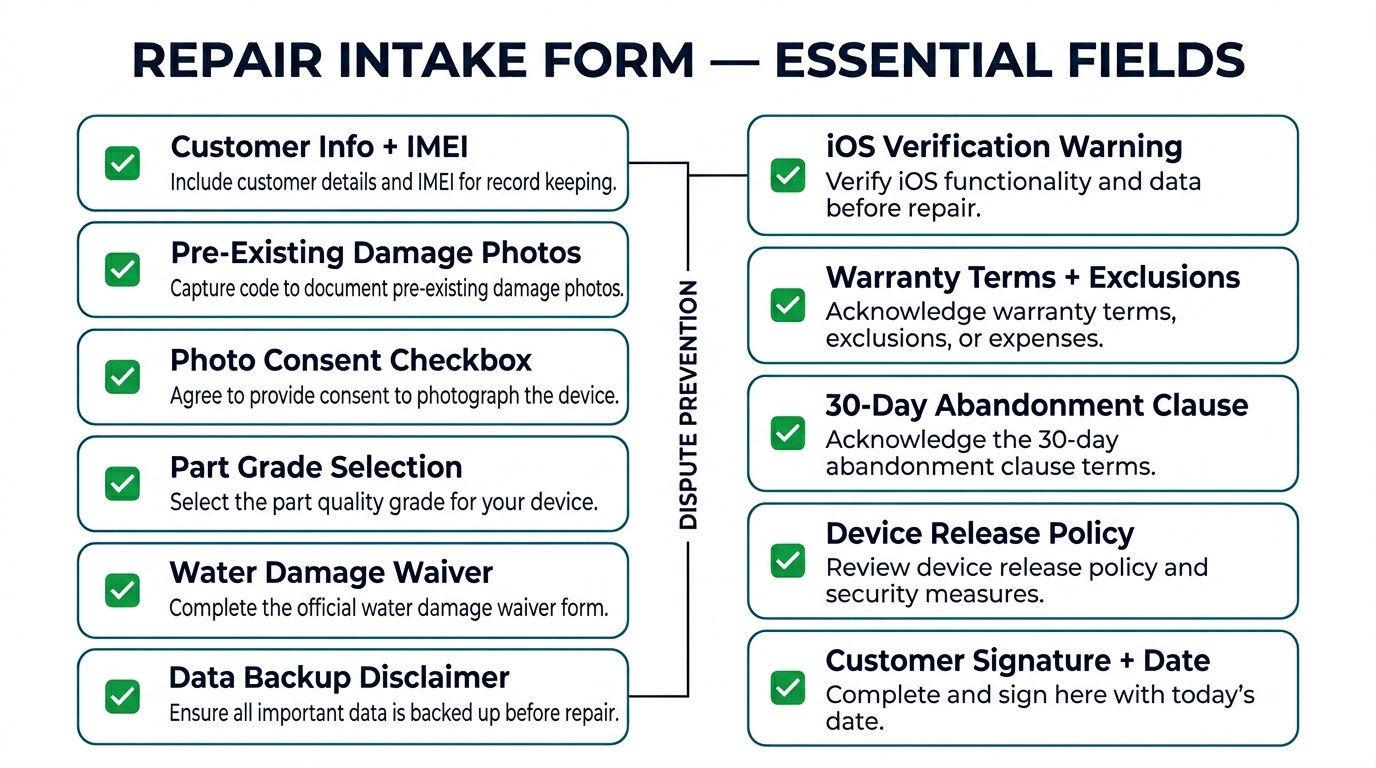
Every scenario above has one thing in common: the shop that had documentation won the dispute. The shop that didn't lost money.
Based on real forms from Cell City, Dr. Phone Fix, Jefferson Telecom, and the Hubtiger liability waiver guide, here are the fields that actually prevent disputes:
Non-negotiable fields:
| Field | Why It Matters |
|---|---|
| Customer name, phone, email, device IMEI | Identifies device and contact for pickup disputes |
| Pre-existing damage checklist with front/back photos | Proves what was already broken before you touched it |
| Photo consent checkbox | Legal basis for your before/during/after documentation |
| Part grade selection with customer initials | Prevents "you used a cheap part" accusations (Scenario 3) |
| Water/liquid damage waiver | Covers you for data recovery and water damage jobs (Scenario 4) |
| Data backup disclaimer | "Shop is not responsible for data loss" |
| iOS verification warning acknowledgment | Prevents "Apple says it's fake" returns (Scenario 5) |
| Warranty terms: duration + what voids it | Physical damage, liquid exposure, unauthorized modification |
| 30-day abandonment clause | Xcessoriz uses this exact language |
| Device release policy | "Device released only to person on this work order" (see Edge Case section below) |
| Customer signature and date | Makes everything above enforceable |
Pro tips from the community:
- Photograph the device next to the signed form — timestamps both together
- Email a copy of the signed form immediately — they can't later claim they didn't agree
- For liquid damage: get a verbal walkthrough on camera pointing out pre-existing damage
What the Law Actually Says
This is general information, not legal advice.
Two legal concepts matter for phone repair shops:
Magnuson-Moss Warranty Act (MMWA): This federal law governs written warranties on consumer products. For repair shops, MMWA applies to the parts you install, not labor. If you advertise a "warranty" on screen replacements, MMWA disclosure rules kick in — you must state what's covered, the duration, and the claim process. The Berkeley Law analysis and NCLC guidance both confirm this scope. Practical tip: call it a "limited parts replacement guarantee" rather than a "warranty."
Implied warranty of merchantability: Per the Florida CFO consumer protection page and most US state law, selling a new part carries an implied warranty that it will work as expected for a reasonable period — even if your receipt says "AS-IS, NO WARRANTY." You cannot fully disclaim this for a new part. What you CAN limit: liability for physical damage, water damage, and customer misuse — exactly what your intake form exclusions are for.
If you sell "extended warranty" or "service contract" packages alongside repairs, the TexConsumerLaw analysis warns that additional MMWA disclosure obligations attach. Avoid the words "warranty" + "service contract" together.
Edge Case: Who Gets Refunded When Payer ≠ Device Owner?
A shop owner on r/mobilerepair shared this situation: "Customer came with a dead phone. Her boyfriend came and paid in advance. They fought. The boyfriend came back asking for the money or the phone since he paid. The girlfriend is saying not to give him the phone."
The community was unanimous. The top-voted response: "Doesn't matter who paid. Whoever gave you the phone is who you return it to. Don't refund. That argument is between them, not you."
Another commenter gave the legal framing: "In the US it's still her property. He paid for a service, not the device."
Your script: "Our policy is that the device is returned to the person who brought it in and signed the work order. Any payment dispute between you and the other party would need to be resolved between yourselves."
When the Shop IS at Fault
Not every dispute is a scam. The repair industry has real problems, and acknowledging them makes your refund policy more credible.
In Chicago, "Phone Fixed 4 Less" accumulated 20 city violations and $142,000 in fines for price gouging and returning phones with new defects. Parts switcheroo scams — quoting OEM but installing cheap aftermarket — are documented industry-wide. The CPR vs. Assurant lawsuit showed a franchise parent company competing directly against its own 825 repair shop franchisees.
The math favors flexibility: "Improper service" is the most common chargeback type in repair. Shops that refuse all refunds push customers toward chargebacks costing 2–2.5x the original repair. A $50 goodwill credit today prevents a $400+ chargeback tomorrow.
When to say yes to a refund:
- Part failed within warranty with no physical damage signs → replace, no questions. If the part was DOA, your supplier's DOA policy should cover you.
- Your tech made a documented error (wrong screws, damaged flex) → fix it free
- Borderline complaint on a sub-$150 repair → partial refund or free screen protector costs less than the chargeback risk
The shops with the best reputations aren't the ones that never refund — they're the ones that handle mistakes honestly and save the firm "no" for clear-cut customer damage.
Conclusion
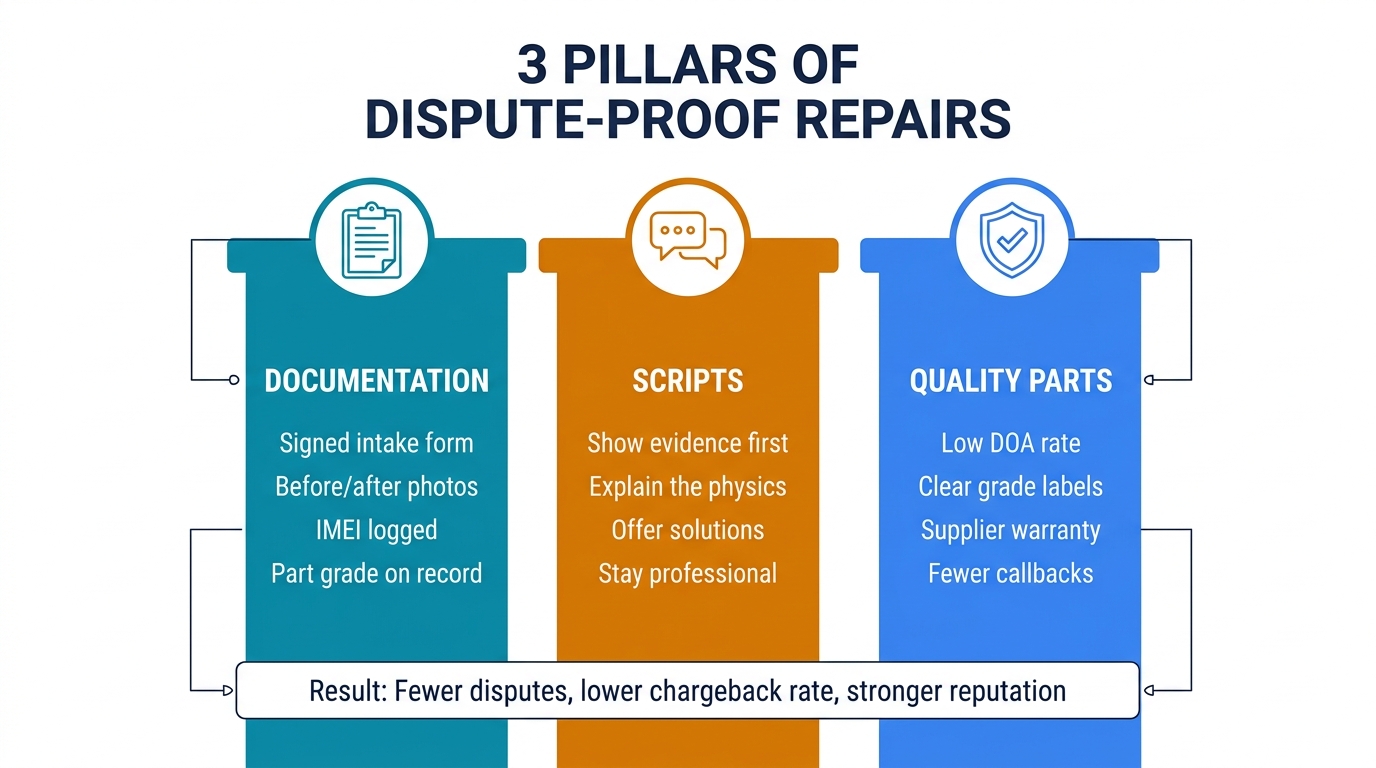
The difference between a shop that bleeds money on disputes and one that handles them cleanly comes down to three things:
- Documentation at intake — photos, signed forms, part grade acknowledgment, IMEI logged
- Scripts that defuse, not escalate — show evidence, explain physics, offer solutions
- Parts that reduce failure rates — fewer DOA screens and premature OLED failures mean fewer "your repair broke my phone" conversations
Your parts supplier is the upstream lever most shop owners overlook. A supplier with a clear DOA return policy, consistent part grading (OEM / Soft OLED / Hard OLED / Incell clearly labeled), and low defect rates directly reduces your dispute rate.
At PRSPARES, we back every wholesale order with transparent quality grading, a documented DOA return window, and technical support for troubleshooting part issues before they become customer disputes.
Request a wholesale quote → or read our DOA Parts Policy Checklist for Repair Shops for a framework you can use with any supplier.
FAQ
How long should a phone repair warranty be?
Industry standard is 30–90 days for parts defects. Screen replacements typically carry 30–60 days, battery replacements 30 days, motherboard repairs 14–30 days. Cell City's published warranty policy is a good reference — it explicitly excludes physical and liquid damage after repair.
Can a customer do a chargeback on a phone repair?
Yes. Per Mastercard's merchant guidelines, merchants are liable for all card-not-present chargebacks and must pay the dispute fee regardless of outcome. Your defense: signed work order, before/after photos, customer-approved pricing in writing, signed pickup receipt. Expect the first round to go against you — prepare to escalate to pre-arbitration with your full evidence package.
Should repair shops accept credit cards or go cash-only?
Most shops accept cards because refusing them loses customers. For high-risk services (water damage recovery, used device purchases), experienced owners require cash with a signed waiver. Middle ground: accept cards for standard repairs, require a non-refundable diagnostic deposit in cash for liquid damage and complex jobs.
What should a phone repair intake form include?
At minimum: customer contact info, device IMEI, pre-existing damage checklist with photos, part grade selection with customer initials, water/liquid damage waiver, data backup disclaimer, iOS verification warning acknowledgment (for screens), warranty terms with exclusions, 30-day abandonment clause, device release policy, and customer signature. See the Hubtiger liability waiver guide for a field-by-field breakdown with free templates.
How do I handle a customer who threatens to leave a bad review?
Don't fold. Your script: "I understand you're frustrated. I've shown you the evidence of what happened, and I want to find a fair solution — I can offer [discounted re-repair / store credit]. What I can't do is refund for damage that occurred after the repair." If they do leave a review, respond professionally with facts. One shop owner suggested having a solicitor draft a template letter for defamation cases — the letterhead alone often gets reviews removed.
How much does a phone screen repair cost in 2026?
Apple official pricing: iPhone 17 Pro Max at $379, iPhone 16/16e at $279. Third-party shops: minor crack repair $50–$120, full screen replacement $150–$350, OLED replacements $200–$400. Samsung S26 series starts around $209. These numbers matter for your refund policy — know the replacement cost so you can calculate whether a goodwill credit is cheaper than a chargeback.